What Happens During a Spray Foam Survey?
Learn what happens during a professional spray foam survey. Our guide covers the inspection process, what surveyors check, and how Spray Foam Survey reports help homeowners.
What Happens During a Spray Foam Survey?
If you’re considering a spray foam survey for your property — or wondering what’s involved when an inspector visits — you’ll want to know exactly what to expect. A thorough spray foam inspection involves much more than a quick visual check. Understanding the process helps you prepare properly and ensures you get the most comprehensive assessment of your foam insulation’s condition.
Pre-Survey Preparation and Initial Assessment
When we arrive for a spray foam survey, the first step is understanding your property’s history and any concerns you might have. We’ll ask about when the foam was installed, any issues you’ve noticed, and what prompted you to book the survey.
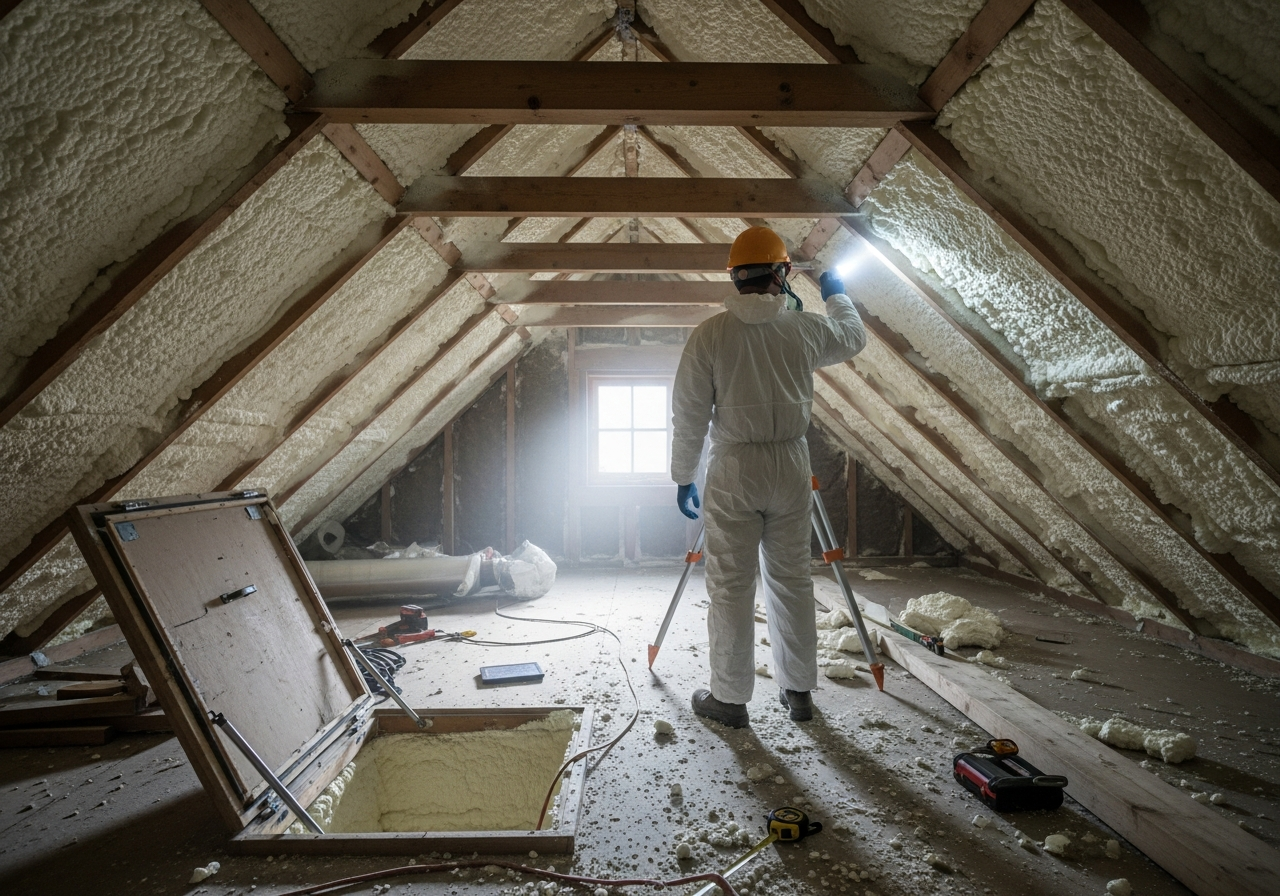
The initial walkthrough focuses on identifying all areas where spray foam has been applied. This includes obvious locations like loft spaces and cavity walls, but also less visible areas such as behind plasterboard or in service voids. We document the extent of the installation and note any variations in foam type or application method.
Before any detailed inspection begins, we check for safe access to all areas. This might involve moving stored items, setting up proper lighting, or ensuring adequate ventilation in confined spaces. Safety equipment is always our priority — both for our team and your property.
Detailed Physical Examination Process
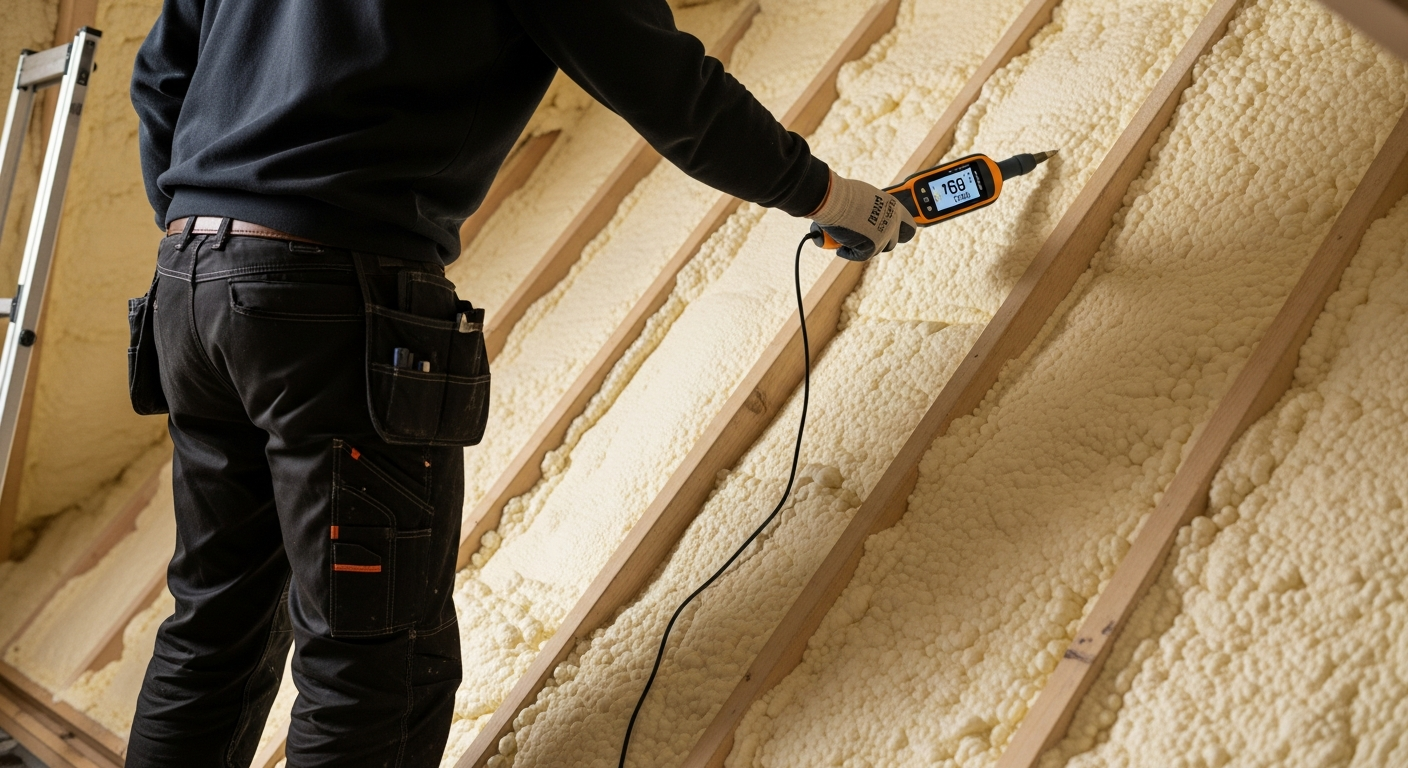
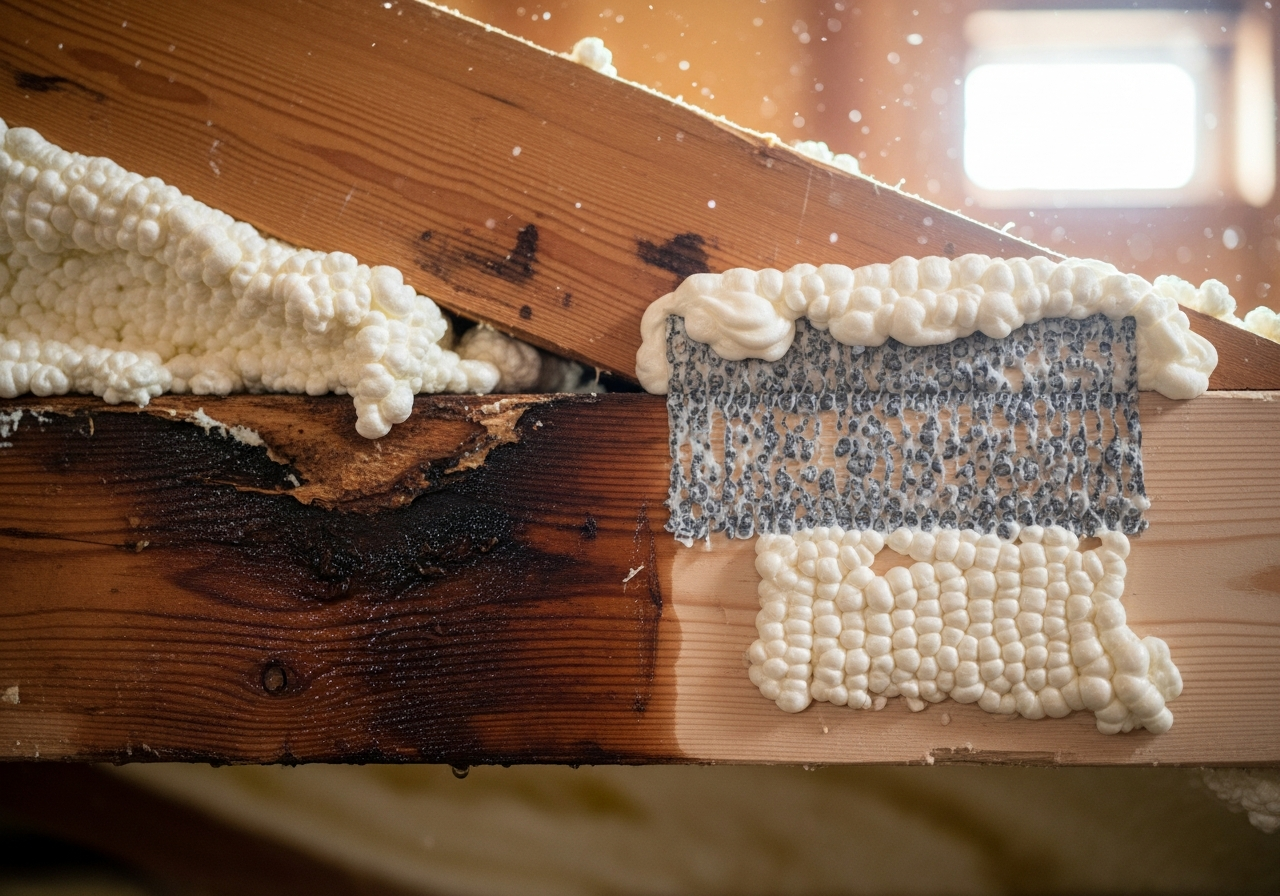
The core of any spray foam survey involves hands-on inspection of the foam itself. We examine the surface condition, looking for signs of shrinkage, cracking, or poor adhesion to structural elements. Foam that’s pulling away from rafters or showing gaps can indicate installation problems or natural deterioration.
We test the foam’s firmness and flexibility by gentle probing. Well-applied foam should feel consistent and resilient. Soft spots, brittle areas, or sections that compress excessively can signal issues with the original mixing ratios or curing process.
Moisture detection is crucial during this phase. We use specialist meters to check for dampness within the foam structure and on adjacent timber. Trapped moisture can lead to serious structural problems, so we pay particular attention to areas where ventilation might be compromised.
Each area receives photographic documentation, creating a visual record of the foam’s current condition. These images become part of your condition report and provide a baseline for future inspections.
Structural and Environmental Checks
Beyond examining the foam itself, we assess how the installation affects your property’s structure and environment. This involves checking timber rafters and other structural elements for signs of moisture damage, rot, or pest activity that might be hidden behind the foam.
Ventilation assessment forms a critical part of the survey. We examine whether the foam installation has blocked necessary airflow paths and evaluate the effectiveness of any ventilation systems that remain. Poor ventilation can create condensation problems that aren’t immediately obvious.
We also investigate the interface between the foam and other building elements — where it meets roof tiles, walls, or service penetrations. These junction points are often where problems develop first, as movement between different materials can create gaps or stress points.
Temperature and humidity readings help us understand the internal environment and whether the foam is performing as intended from a thermal perspective.
Documentation and Analysis Phase
All findings are recorded systematically during the survey process. We create detailed notes about foam condition, structural observations, and any defects discovered. Measurements of affected areas help quantify any issues and inform potential remediation costs.
The analysis phase involves correlating our observations with industry standards and building regulations. We compare what we’ve found against acceptable performance criteria and identify any areas where the installation falls short of professional standards.
Risk assessment is an important element — we evaluate which issues require immediate attention and which can be monitored over time. This helps prioritise any remedial work and gives you a clear understanding of urgency levels.
Our comprehensive Spray Foam Survey & Condition Report brings together all these elements into a clear, actionable document that explains exactly what we’ve found and what it means for your property.
Key Takeaways
• A professional spray foam survey involves comprehensive physical examination, not just visual inspection • Moisture detection and ventilation assessment are critical components of the process • Structural elements adjacent to the foam receive thorough examination for damage or deterioration • Documentation includes photography, measurements, and detailed notes for future reference • The survey process typically takes 2-4 hours depending on property size and complexity
What Our Customers Say
Trusted by homeowners across Coventry & Warwickshire — here's what they have to say.
"Brilliant service from start to finish. The team were professional, tidy, and explained everything clearly. Our energy bills have dropped noticeably since the new insulation went in."
"Had spray foam removed and mineral wool installed. The surveyor was thorough and honest about what needed doing. Really impressed with the quality of work."
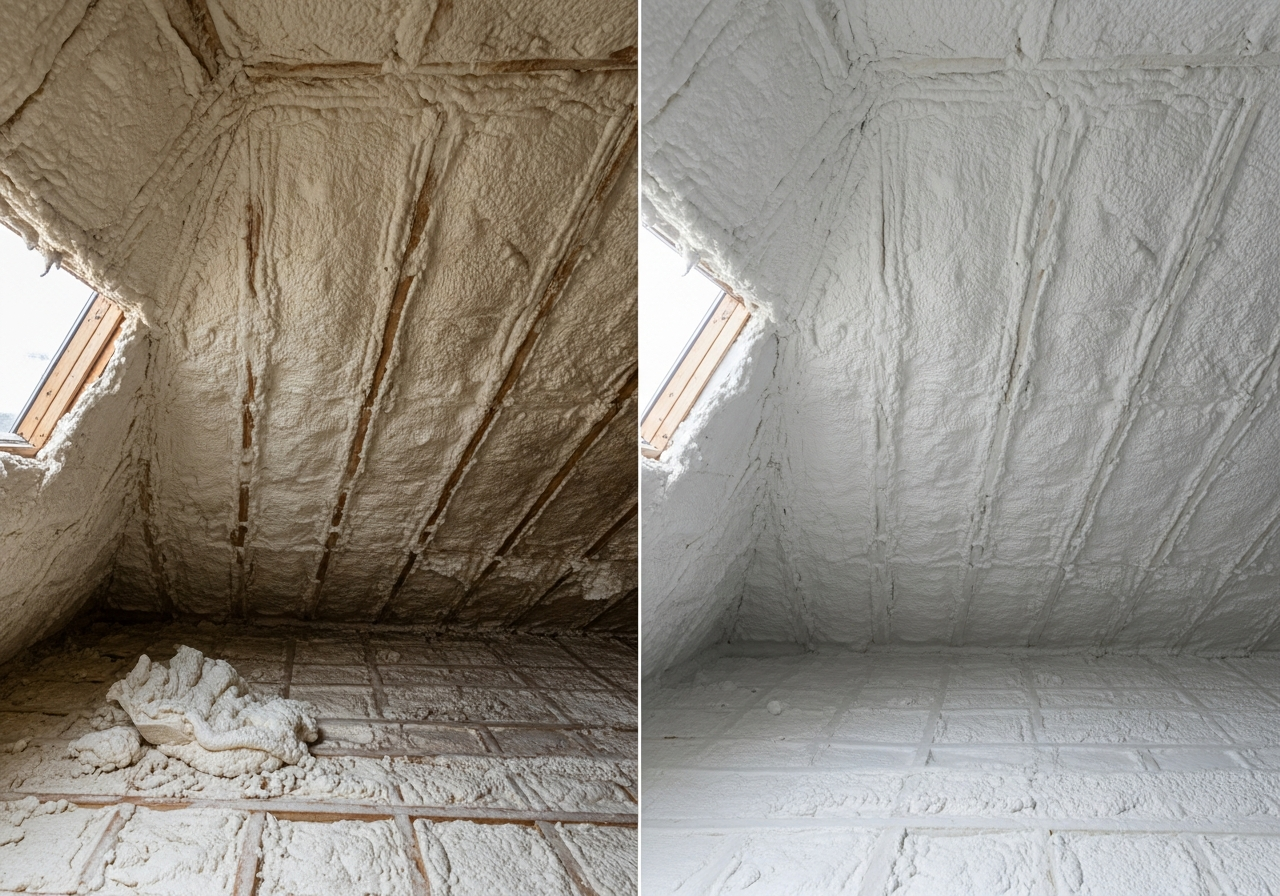
"We had terrible condensation in our loft. They diagnosed the problem quickly, improved the ventilation, and replaced the old insulation. No more damp and the house is noticeably warmer."
Frequently Asked Questions
Most surveys take between 2-4 hours, depending on your property size and the extent of foam installation. Larger properties or complex installations may require additional time for thorough examination of all areas.
While you don't need to supervise the entire process, we recommend being available at the start to discuss any concerns and at the end to go through our initial findings. This helps ensure we address all your questions.
If we identify significant issues, we'll explain them clearly and discuss your options. This might include immediate remedial work, ongoing monitoring, or specialist consultation depending on the severity and nature of the problems found. Ready to book your spray foam survey? Contact us today to arrange a comprehensive inspection by our experienced team. We'll provide you with a detailed condition report and clear recommendations for your property's specific situation. META_DESCRIPTION: Learn what happens during a professional spray foam survey. Our guide covers the inspection process, what surveyors check, and how Spray Foam Survey reports help homeowners.
Ready for a Free Survey?
No obligation. We assess your property and provide a detailed quote — usually within 48 hours.