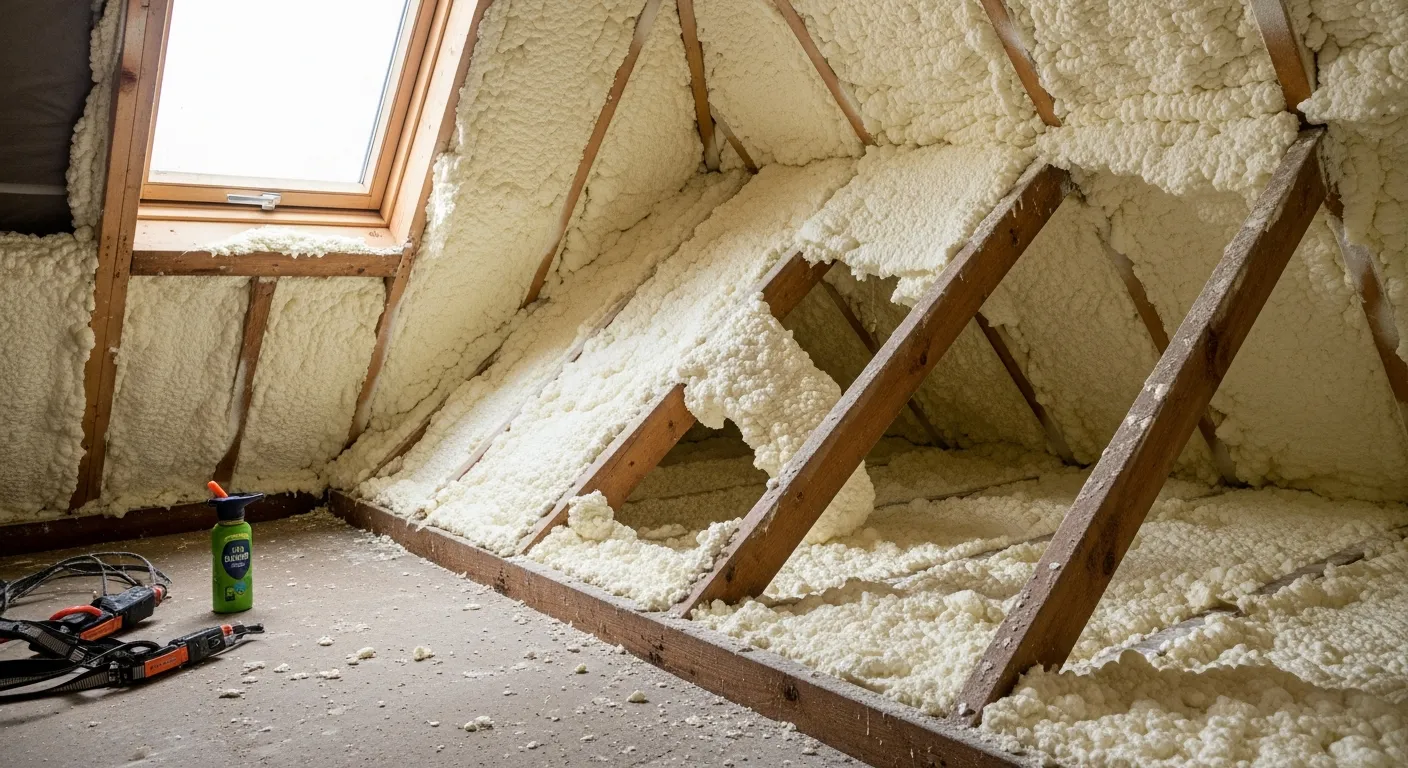
Will Spray Foam Affect My Mortgage?
If you're considering a remortgage or house move, discovering spray foam insulation in your loft can throw a serious spanner in the works. Many homeowners...
Will Spray Foam Affect My Mortgage?
If you’re considering a remortgage or house move, discovering spray foam insulation in your loft can throw a serious spanner in the works. Many homeowners are shocked to learn that what they thought was an upgrade could actually complicate their mortgage application. The problem isn’t the insulation itself — it’s how mortgage lenders and surveyors view certain types of spray foam installation. Understanding these issues before you need to remortgage or sell can save you thousands in delays, additional surveys, or emergency removal costs.
Why Mortgage Lenders Worry About Foam Insulation
Mortgage lenders have become increasingly cautious about spray foam insulation, particularly when it’s applied directly to roof timbers without adequate ventilation. Their concerns stem from several factors that could affect the property’s long-term value and structural integrity.
The primary worry is moisture retention. When spray foam creates an impermeable barrier against roof timbers, it can trap moisture that would normally evaporate naturally. Over time, this trapped moisture can lead to timber decay, which weakens the roof structure. Lenders see this as a potential risk to their investment.
Surveyors also flag spray foam because it makes it impossible to inspect the roof structure properly. They can’t see the condition of rafters, battens, or the roof membrane when everything’s covered in foam. This lack of visibility means they can’t assess whether there are existing problems or potential issues developing.
The RICS (Royal Institution of Chartered Surveyors) has issued guidance stating that spray foam applied directly to roof timbers should be considered a risk factor. This guidance influences how mortgage valuations are carried out across the UK.
How Different Types of Foam Create Different Problems
Not all spray foam installations cause the same level of concern. Open-cell foam, which allows some air movement, generally presents fewer issues than closed-cell foam systems. However, even open-cell foam can cause problems if it’s been applied incorrectly or without proper ventilation considerations.
Closed-cell foam creates the biggest headaches for mortgage applications. This type forms a complete vapour barrier, which can trap moisture against timber if the roof wasn’t properly prepared beforehand. Many installations from the early 2000s used closed-cell systems without adequate consideration for ventilation paths.
The installation method also matters enormously. Foam applied by experienced installers who understood building physics and ventilation requirements often causes fewer issues than rushed jobs that simply sprayed foam everywhere without considering the consequences.
Age plays a role too. Older installations, particularly those done before building standards caught up with the technology, are more likely to flag concerns during mortgage surveys. Properties with foam installed in the last five years, by reputable installers following current best practices, face fewer challenges.
What Happens During a Mortgage Survey
When a mortgage surveyor encounters spray foam insulation, they’re likely to flag it as a concern in their report. This doesn’t automatically kill your mortgage application, but it often triggers additional requirements that can delay or complicate the process.
The surveyor might recommend a specialist timber survey to assess the condition of roof structures beneath the foam. This additional survey typically costs £400-800 and can add weeks to your mortgage timeline. In some cases, they might also request confirmation that the installation meets current building standards.
Some lenders will still approve mortgages on properties with spray foam, but they might offer a lower loan-to-value ratio or require a retention — holding back part of the mortgage until certain conditions are met. This can leave you short of funds at completion, which is particularly problematic if you’re in a chain.
The most challenging scenario occurs when the surveyor recommends removal before the lender will proceed. Our spray foam removal for mortgage approval service has helped many homeowners navigate exactly this situation, working with mortgage timelines to get properties back to a mortgageable condition.
Your Options When Foam Becomes a Mortgage Obstacle
If spray foam is blocking your mortgage application, you have several paths forward. The right choice depends on your specific circumstances, the type of foam involved, and how urgently you need to proceed.
Complete removal is often the most definitive solution. While this represents a significant cost, it eliminates the mortgage obstacle entirely and usually increases the property’s appeal to future buyers. Professional removal ensures the roof structure is properly exposed and any underlying issues are addressed.
Partial removal might be possible in some cases, particularly where foam has only been applied to specific areas. This approach can be more cost-effective while still addressing the surveyor’s main concerns about structural inspection.
For newer installations by reputable companies, you might be able to provide documentation proving the work met appropriate standards. Some lenders will accept detailed installation certificates and warranties, though this route isn’t guaranteed to work.
Switching lenders is another option, as different institutions have varying policies on spray foam. Specialist mortgage brokers often know which lenders are more flexible on these issues, though you’ll still need to meet their specific criteria.
Key Takeaways
• Spray foam insulation can complicate mortgage applications because it prevents structural inspections and may trap moisture against roof timbers • Closed-cell foam and older installations typically cause more problems than modern open-cell systems installed with proper ventilation • Mortgage surveyors often require additional specialist surveys when they encounter foam, adding cost and delays to the application process • Complete removal is usually the most reliable solution for mortgage approval, though other options exist depending on your specific situation • Working with experienced professionals who understand both building requirements and mortgage processes can help you navigate these challenges effectively
What Our Customers Say
Trusted by homeowners across Coventry & Warwickshire — here's what they have to say.
"Brilliant service from start to finish. The team were professional, tidy, and explained everything clearly. Our energy bills have dropped noticeably since the new insulation went in."
"Had spray foam removed and mineral wool installed. The surveyor was thorough and honest about what needed doing. Really impressed with the quality of work."
"We had terrible condensation in our loft. They diagnosed the problem quickly, improved the ventilation, and replaced the old insulation. No more damp and the house is noticeably warmer."
Frequently Asked Questions
No, lender policies vary significantly. Some will approve mortgages with conditions or lower loan-to-value ratios, while others refuse outright. Specialist mortgage brokers can help identify lenders more likely to work with your specific situation.
Removal costs depend on the property size, foam type, and access difficulties. Most residential properties fall within the £3,000-8,000 range, though complex jobs can cost more. We provide detailed quotes after assessing each property individually.
Sometimes, particularly for newer installations with proper warranties and building control certificates. However, many lenders still prefer properties without foam regardless of documentation, so this approach isn't guaranteed to succeed. --- **Need help with spray foam that's affecting your mortgage prospects?** We carry out professional removal work across Coventry and Warwickshire, working to mortgage timelines where possible. [Get in touch for a property assessment](#contact) and detailed quote.
Ready for a Free Survey?
No obligation. We assess your property and provide a detailed quote — usually within 48 hours.