
Spray Foam & Equity Release: What Surveyors Look For
Learn what surveyors assess when they find spray foam during equity release valuations. Understand red flags, documentation needs & how Spray Foam Removal for Equity Release helps.
Spray Foam & Equity Release: What Surveyors Look For
When you’re considering equity release, the last thing you want is for spray foam insulation to derail your plans. Many homeowners discover too late that certain types of spray foam can make their property unsuitable for equity release schemes. Understanding what surveyors assess when they encounter spray foam insulation helps you prepare for the valuation process and address any concerns before they become roadblocks to accessing your home’s equity.
Why Surveyors Flag Spray Foam During Valuations
Surveyors approach spray foam insulation with particular caution during equity release valuations because of its potential impact on the property’s structural integrity and future marketability. Unlike traditional insulation materials, spray foam creates concerns that extend beyond simple thermal performance.
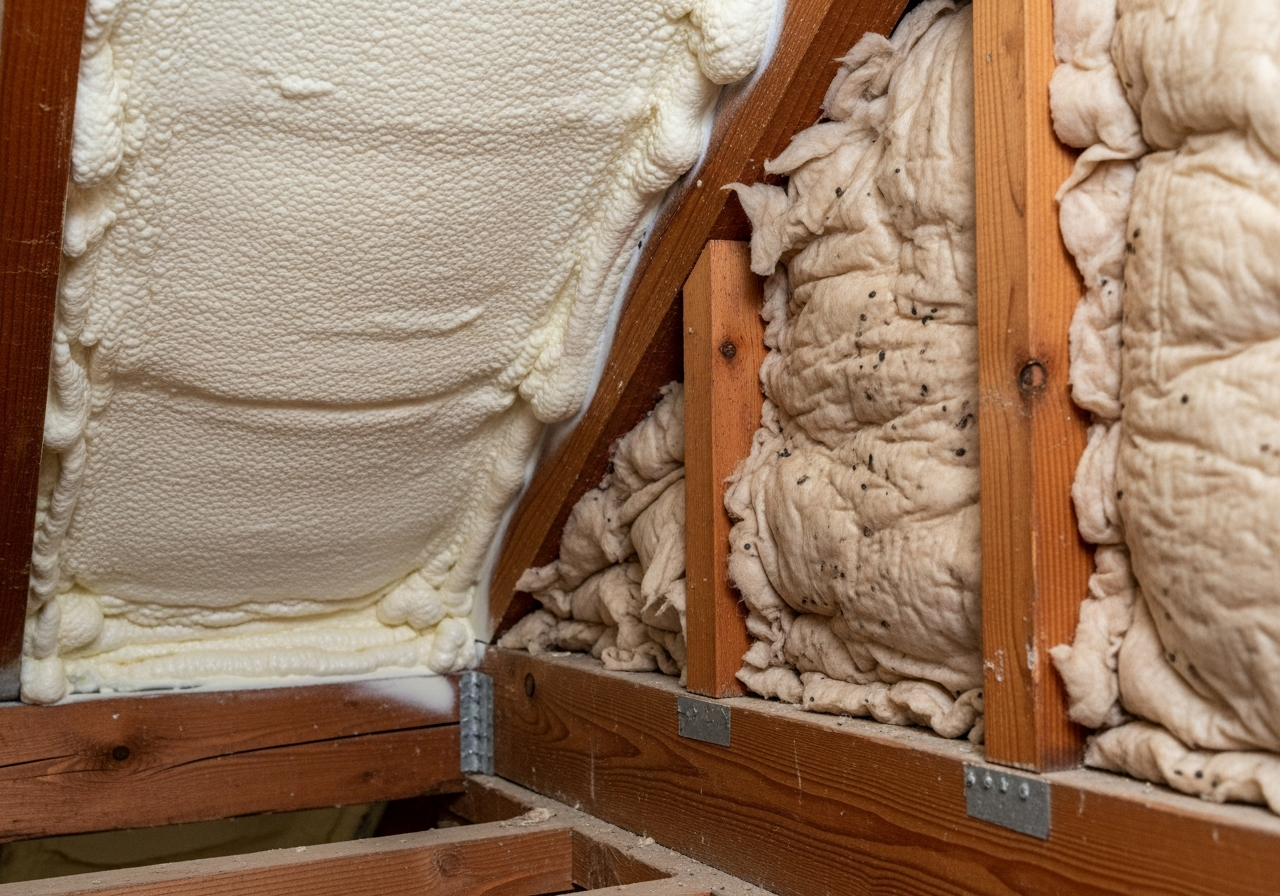
The primary worry centres on closed-cell spray foam applied to roof timbers. When this type of foam adheres directly to rafters and roof deck boarding, it can trap moisture and prevent natural timber movement. Over time, this creates conditions that may accelerate timber decay, potentially compromising the roof structure. Surveyors understand that equity release providers need properties that maintain their value over decades, making structural concerns particularly significant.
Open-cell spray foam presents different challenges. Whilst generally more breathable than its closed-cell counterpart, it can still create moisture-related issues if not properly installed with adequate ventilation. Surveyors also note that open-cell foam offers minimal structural support compared to closed-cell varieties, which affects how they assess the overall roof system.
The surveyor’s report often highlights these concerns because equity release lenders require properties that won’t depreciate due to structural problems. A roof showing signs of moisture damage or structural weakness directly impacts the property’s long-term value and therefore its suitability for equity release.
Specific Issues That Trigger Red Flags
When examining properties with spray foam, surveyors focus on several key indicators that signal potential problems. Evidence of moisture penetration ranks highest among their concerns, particularly water stains on ceilings, dampness around roof edges, or visible mould growth in loft spaces.
Surveyors also assess the foam’s installation quality. Poor application techniques create gaps, uneven coverage, or areas where the foam has pulled away from timber surfaces. These defects compromise both insulation performance and structural protection, raising questions about the property’s maintenance standards.
The age and condition of roof timbers receive particular attention. If surveyors can’t properly inspect timber condition due to foam coverage, they may recommend further investigation or specialist assessment. This uncertainty often translates into conservative valuations or recommendations for remedial work before equity release approval.
Ventilation adequacy represents another critical assessment point. Surveyors look for evidence that proper ventilation measures were maintained or enhanced when the foam was installed. Inadequate ventilation combined with spray foam creates the perfect conditions for moisture problems that won’t become apparent for years.
Documentation and Certification Requirements
Modern equity release valuations place significant emphasis on proper documentation when spray foam is present. Surveyors expect to see evidence of Building Regulations compliance, particularly for installations completed after 2010 when awareness of spray foam issues increased.
Installation certificates from qualified contractors carry substantial weight in the assessment process. These documents should detail the type of foam used, application methods, ventilation measures implemented, and any structural considerations addressed during installation. Without proper documentation, surveyors often recommend further investigation or specialist reports.
Insurance implications also feature prominently in surveyor assessments. Many insurers now exclude or limit cover for properties with certain types of spray foam insulation. Surveyors understand that equity release providers need assurance that properties remain insurable throughout the loan term, making insurance availability a key consideration in their reports.
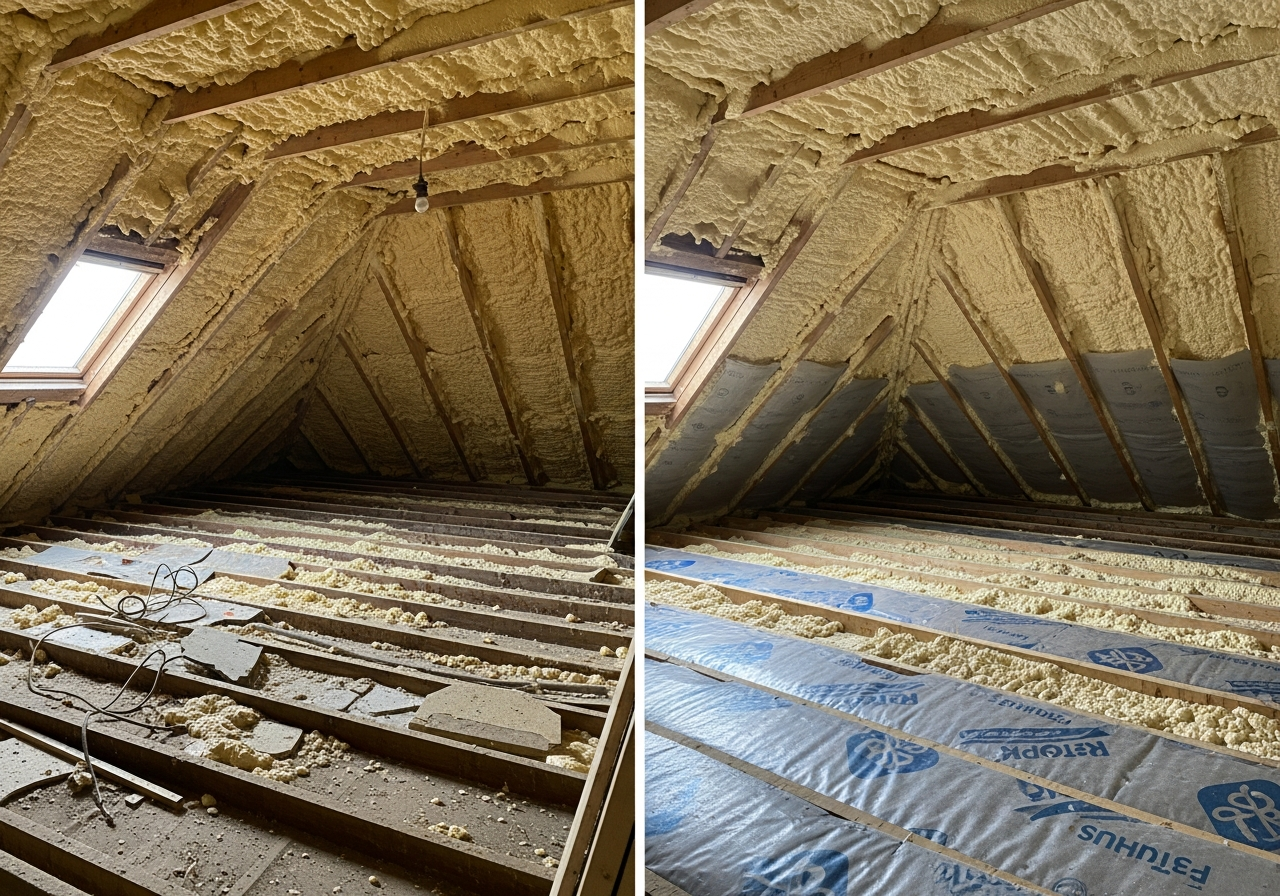
For properties where spray foam creates valuation concerns, surveyors may recommend specialist structural surveys or removal of the foam to allow proper timber inspection. This is where our spray foam removal for equity release service becomes particularly valuable, providing the documentation and remedial work needed to satisfy surveyor requirements.
Moving Forward with Confidence
The assessment process doesn’t have to end with spray foam concerns. Surveyors appreciate homeowners who proactively address potential issues before the valuation takes place. Having spray foam professionally assessed and, if necessary, properly removed demonstrates responsible property ownership and removes uncertainty from the surveyor’s evaluation.
Professional removal allows surveyors to properly inspect roof timbers, assess structural integrity, and provide accurate valuations based on the property’s actual condition rather than assumptions about hidden problems. This approach often results in more favourable assessments and smoother equity release applications.
Key Takeaways
• Surveyors focus on moisture damage risks and structural concerns when assessing properties with spray foam insulation • Proper documentation, including installation certificates and Building Regulations compliance, significantly influences surveyor assessments • Insurance availability affects equity release suitability, making insurer attitudes toward spray foam relevant to valuations • Professional assessment and removal of problematic spray foam often resolves surveyor concerns more effectively than attempting to work around them • Proactive approach to addressing spray foam issues typically results in more favourable equity release valuations

What Our Customers Say
Trusted by homeowners across Coventry & Warwickshire — here's what they have to say.
"Brilliant service from start to finish. The team were professional, tidy, and explained everything clearly. Our energy bills have dropped noticeably since the new insulation went in."
"Had spray foam removed and mineral wool installed. The surveyor was thorough and honest about what needed doing. Really impressed with the quality of work."
"We had terrible condensation in our loft. They diagnosed the problem quickly, improved the ventilation, and replaced the old insulation. No more damp and the house is noticeably warmer."
Frequently Asked Questions
Not necessarily, but it depends on the type of foam, installation quality, and overall property condition. Surveyors assess each situation individually, considering factors like documentation, structural impact, and insurance implications when making recommendations.
Professional assessment typically takes 1-2 days, whilst complete removal projects usually require 3-7 days depending on property size. The surveyor can then complete their assessment once any remedial work is finished and documented.
Yes, but surveyors may recommend further investigation or remedial work before final approval. Addressing concerns upfront often proves more efficient and can result in better valuations than waiting for issues to be identified during the formal assessment process. Understanding what surveyors look for helps you prepare properly for the equity release process. If you're concerned about spray foam in your property, we can assess the situation and provide the professional removal services needed to satisfy surveyor requirements and protect your equity release plans. META_DESCRIPTION: Learn what surveyors assess when they find spray foam during equity release valuations. Understand red flags, documentation needs & how Spray Foam Removal for Equity Release helps.
Ready for a Free Survey?
No obligation. We assess your property and provide a detailed quote — usually within 48 hours.