Open Cell vs Closed Cell Spray Foam: Key Differences
Learn the key differences between open cell vs closed cell spray foam insulation. Expert guide covering performance, removal challenges, and identification tips from our Closed Cell & Open Cell Spray Foam Removal specialists.
Open Cell vs Closed Cell Spray Foam: Key Differences
When you discover spray foam insulation in your loft or walls, understanding which type you’re dealing with makes a real difference to any removal or remedial work. We regularly encounter both open cell and closed cell foam during our insulation projects, and each presents distinct challenges and characteristics that affect how we approach the work.
What Makes These Foam Types Different
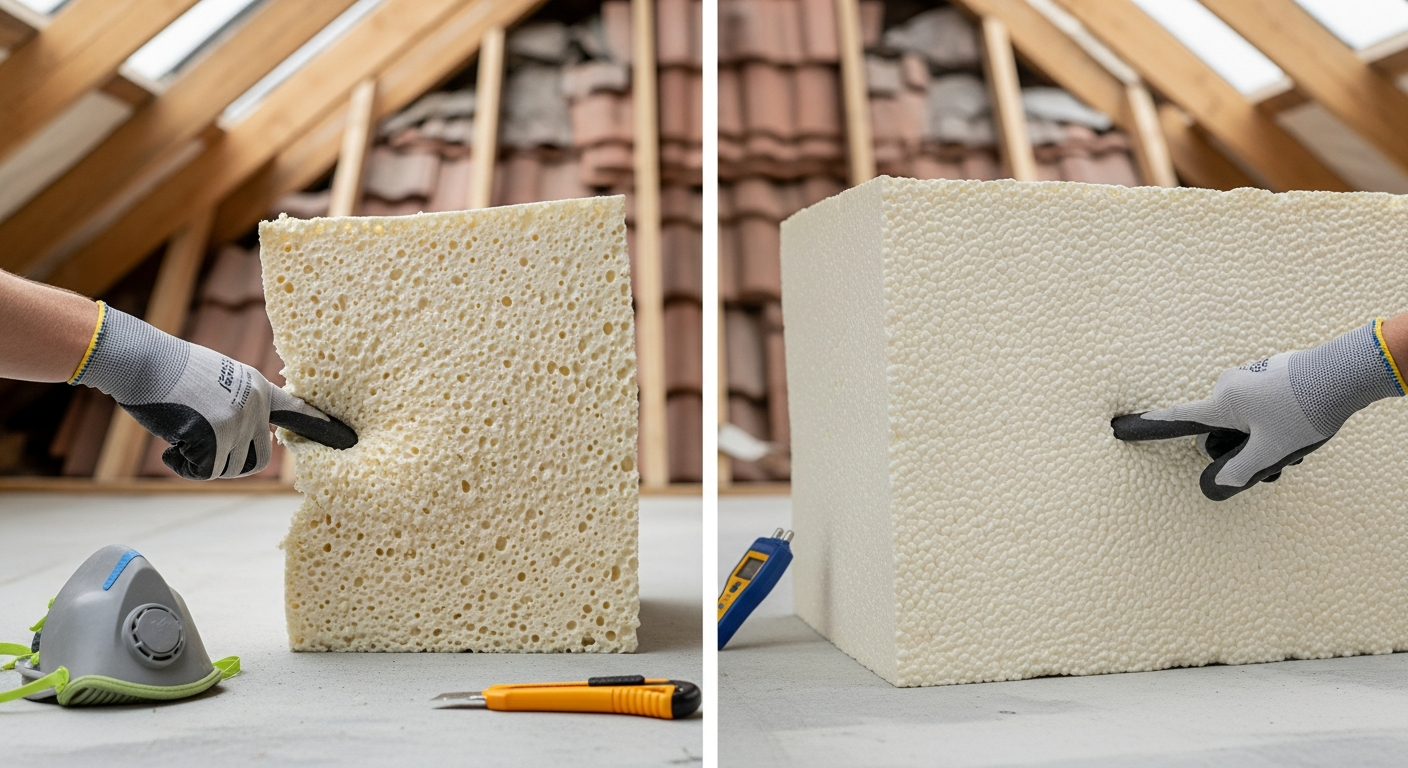
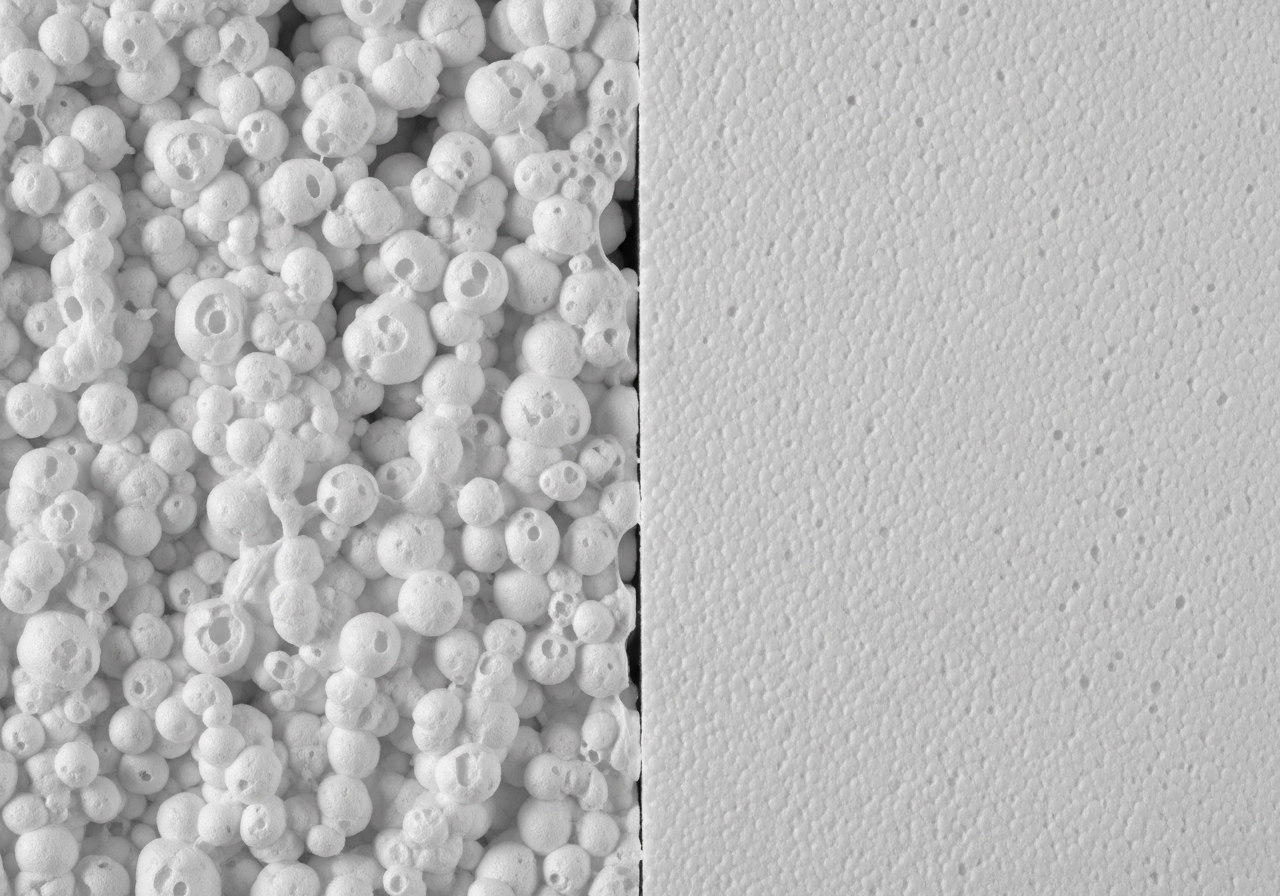
The fundamental difference lies in the cellular structure. Open cell foam contains millions of tiny cells that aren’t completely closed off from each other, creating a spongy, flexible material. Closed cell foam, by contrast, has sealed cells that trap gas inside, resulting in a much denser, rigid structure.
This structural difference creates a cascade of other variations. Open cell foam typically expands to around 3 pounds per cubic foot density, whilst closed cell reaches 1.5 to 2 pounds per cubic foot but packs far more material into that space. The density affects everything from thermal performance to moisture behaviour.
From our experience working with both types, closed cell foam feels almost like rigid plastic when properly cured. Open cell has a softer, more yielding texture — you can often compress it slightly with your hand. These tactile differences help us identify which type we’re dealing with during initial surveys.
Performance Characteristics That Matter
Thermal resistance varies significantly between the two. Closed cell foam delivers approximately R-6 to R-7 per inch of thickness, whilst open cell provides around R-3.5 to R-4 per inch. For homeowners, this means closed cell achieves the same insulation value in roughly half the thickness.
Moisture handling represents perhaps the most crucial difference. Closed cell foam acts as a vapour barrier, completely blocking moisture transmission. Open cell foam allows moisture vapour to pass through, which can be beneficial for allowing structures to breathe but problematic in certain applications.
We’ve encountered numerous situations where the wrong type was installed for the specific application. Closed cell foam in timber frame construction can trap moisture, leading to rot issues. Conversely, open cell foam in external walls without proper vapour control can create condensation problems.
Sound dampening qualities also differ markedly. Open cell foam excels at acoustic insulation due to its open structure allowing sound waves to enter and dissipate. Closed cell foam provides minimal sound reduction but excellent structural reinforcement.
Removal Challenges and Considerations
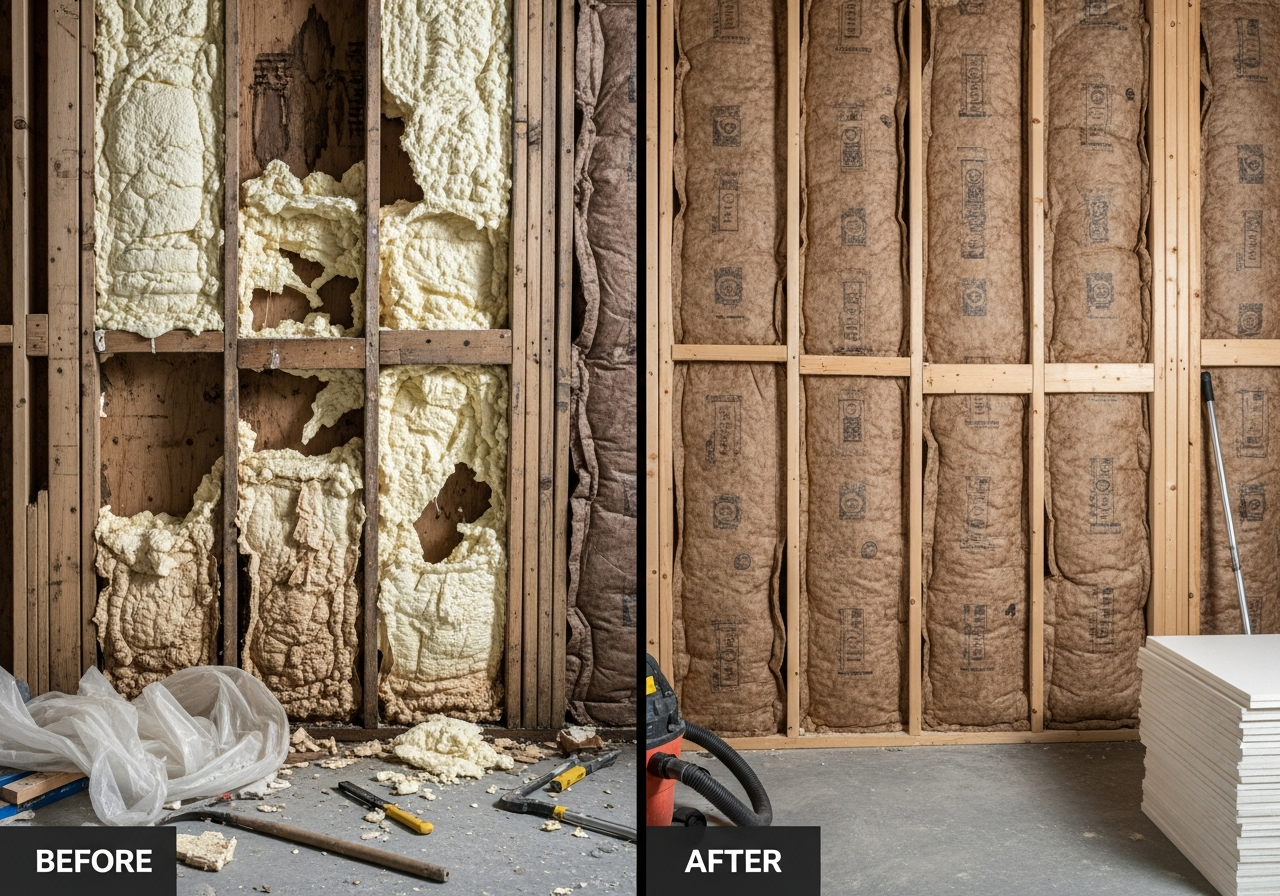
From a removal standpoint — which is where our Closed Cell & Open Cell Spray Foam Removal service becomes essential — these materials present very different challenges. Closed cell foam bonds incredibly strongly to surfaces and often requires mechanical removal with specialised equipment. Its rigid nature means it typically comes off in chunks rather than peeling away cleanly.
Open cell foam, whilst softer, can be equally problematic to remove because it tends to tear and leave residue behind. Its flexibility means it often stretches rather than breaking cleanly away from surfaces. Both types can damage substrates during removal, requiring careful assessment of the underlying structure.
The age of the installation significantly affects removal difficulty. Older installations may have degraded adhesion, making removal easier, or conversely, may have become more brittle and prone to creating dust during removal. We always assess these factors during our initial survey.
Temperature affects both types during removal. Cold conditions make closed cell foam more brittle and prone to cracking, whilst open cell foam becomes stiffer. Warm conditions have the opposite effect, making materials more pliable but potentially stickier.
Making Sense of What You Have
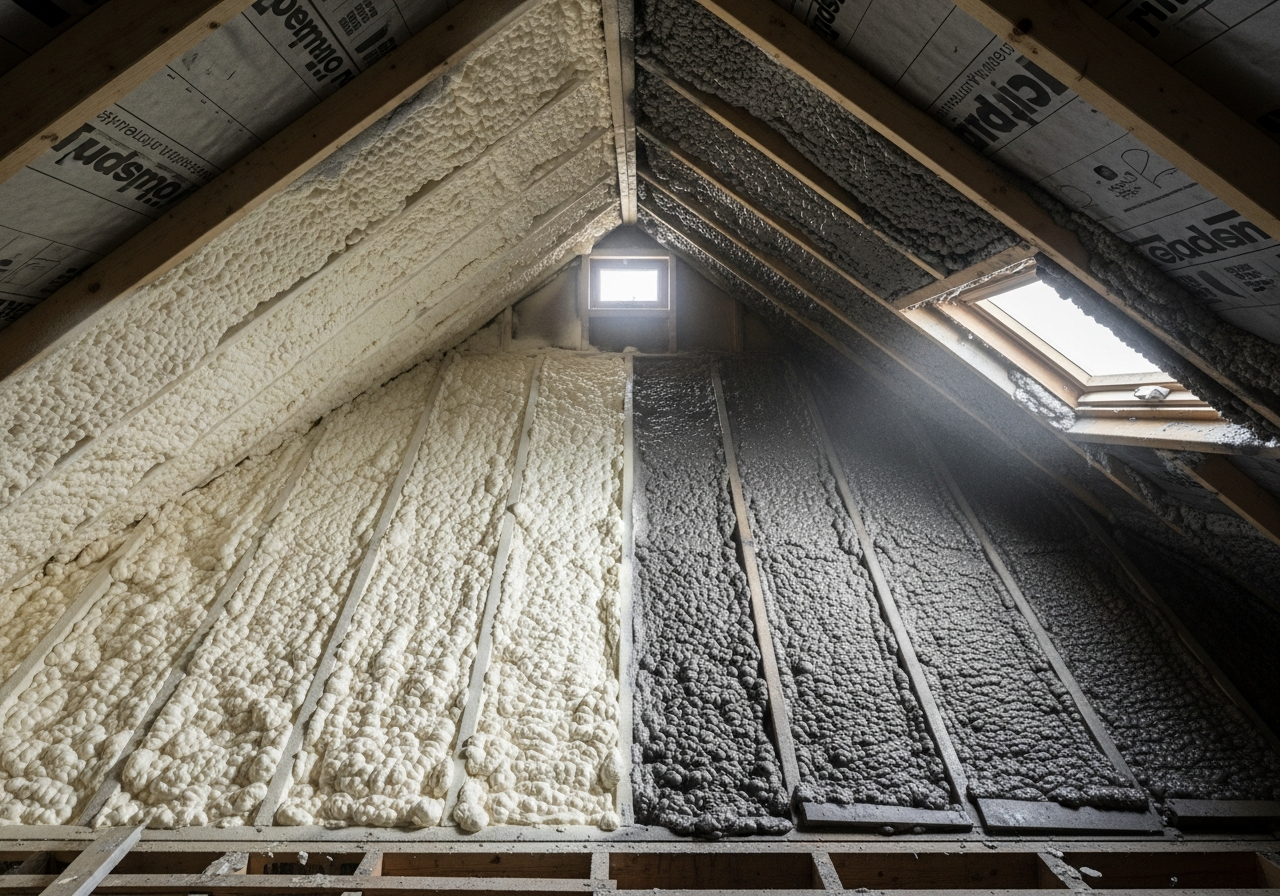
If you’re trying to identify which type exists in your property, several visual and tactile cues help. Closed cell foam appears smoother and more uniform, often with a slight sheen. Open cell foam looks more textured and irregular, typically with a matte finish.
The installation thickness provides another clue. If you see relatively thin applications — say 2-3 inches — achieving significant insulation, it’s likely closed cell foam taking advantage of its superior R-value. Thicker applications of 6-8 inches or more often indicate open cell foam compensating for its lower thermal resistance.
Age can sometimes be determined from appearance and texture changes over time. Both types can yellow slightly, but closed cell foam may show more pronounced colour changes. Any signs of shrinkage, cracking, or adhesion failure indicate potential issues that warrant professional assessment.
Key Takeaways
• Closed cell foam offers superior insulation per inch but acts as a complete vapour barrier • Open cell foam provides excellent sound dampening and allows moisture vapour transmission • Removal challenges vary significantly between types, both requiring specialised approaches • Proper identification helps determine the best removal strategy and potential underlying issues • Professional assessment is crucial for problematic installations regardless of foam type
Professional Spray Foam Assessment
Understanding the differences between open cell and closed cell foam helps you make informed decisions about any remedial work needed. If you’re dealing with problematic spray foam insulation, our team can identify the type you have, assess any issues, and recommend the most appropriate course of action for your specific situation.
Contact us today to arrange a thorough assessment of your spray foam insulation.
What Our Customers Say
Trusted by homeowners across Coventry & Warwickshire — here's what they have to say.
"Brilliant service from start to finish. The team were professional, tidy, and explained everything clearly. Our energy bills have dropped noticeably since the new insulation went in."
"Had spray foam removed and mineral wool installed. The surveyor was thorough and honest about what needed doing. Really impressed with the quality of work."
"We had terrible condensation in our loft. They diagnosed the problem quickly, improved the ventilation, and replaced the old insulation. No more damp and the house is noticeably warmer."
Frequently Asked Questions
Visual identification is possible in many cases. Closed cell foam typically appears smoother and more uniform with a slight sheen, whilst open cell foam looks more textured and irregular. However, definitive identification sometimes requires professional assessment, particularly with older installations that may have changed appearance over time.
Removal costs depend more on factors like accessibility, thickness, and substrate damage than foam type alone. Closed cell foam's strong adhesion can make removal more labour-intensive, but open cell foam's tendency to leave residue can require additional cleaning. We assess each situation individually to provide accurate removal estimates.
Different foam types create different issues. Closed cell foam problems typically relate to trapped moisture and lack of breathability, particularly in older buildings. Open cell foam issues often involve inadequate vapour control or structural concerns from excessive expansion. The specific problems depend heavily on the building type and installation circumstances.
Ready for a Free Survey?
No obligation. We assess your property and provide a detailed quote — usually within 48 hours.