Loft Storage Ideas: Boarding Over Insulation Safely
Learn safe loft storage ideas for boarding over insulation. Expert guide covers raised boarding systems, thermal protection & professional Raised Loft Boarding for Storage solutions.
Loft Storage Ideas: Boarding Over Insulation Safely
Converting your loft into usable storage space seems straightforward — just lay some boards and start filling it up. However, boarding directly over modern insulation creates significant problems that could damage your property and cost thousands to fix. Understanding the correct approach protects both your home’s thermal efficiency and your belongings, whilst creating genuinely useful storage space.
Why Standard Boarding Methods Fail with Modern Insulation
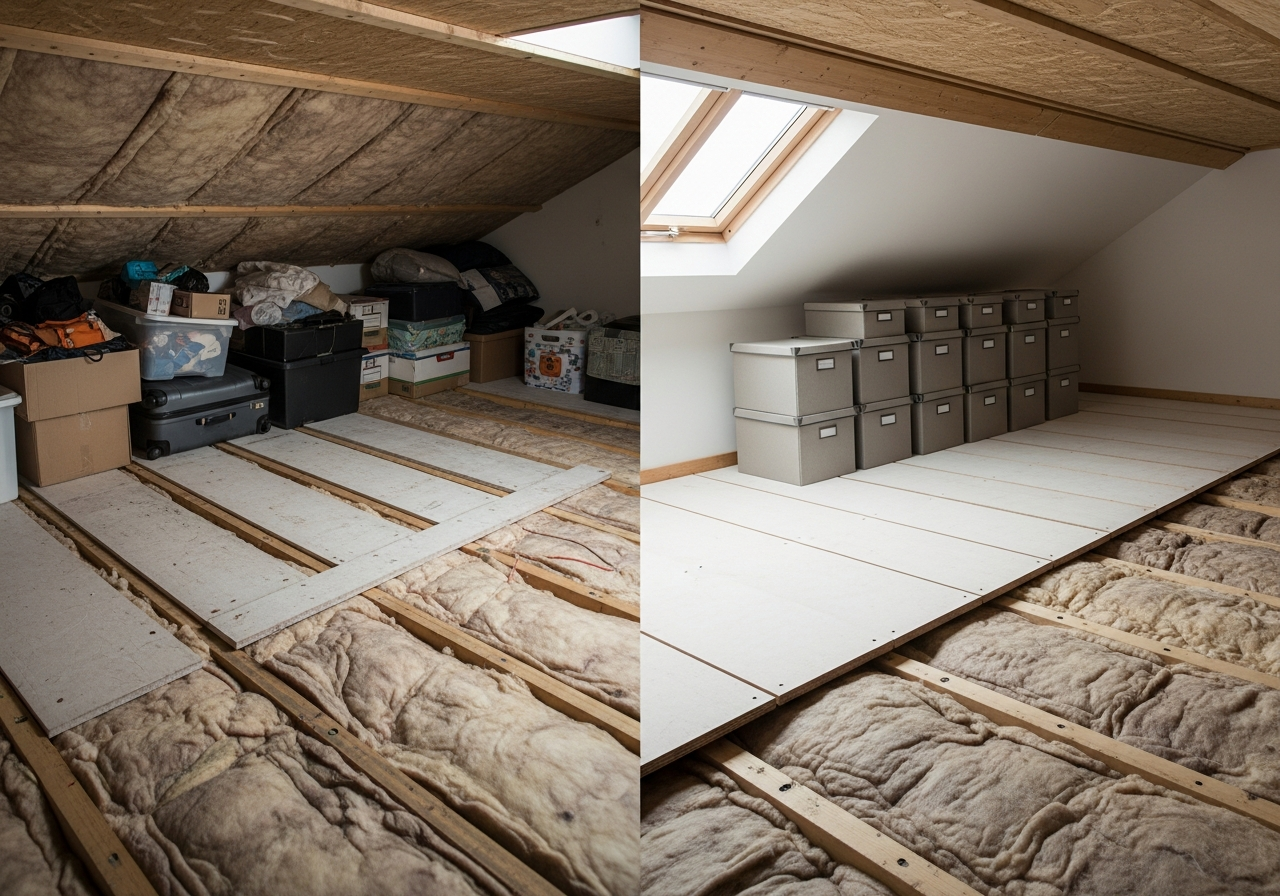
Today’s building regulations require loft insulation depths of 270-300mm — far thicker than the older 100mm layers many homeowners remember. Simply placing boards on top of this thick insulation compresses the material, destroying its thermal properties and creating cold spots that lead to condensation problems.
Compressed insulation loses up to 50% of its effectiveness. When mineral wool or glass fibre gets squashed, the air pockets that provide thermal resistance disappear. This compression effect extends beyond the immediate board area, affecting surrounding insulation and creating thermal bridges that allow heat to escape.
The moisture problems that follow are even more serious. Compressed areas become cold spots where warm air condenses, leading to dampness, mould growth, and potential structural damage. We regularly see lofts where homeowners have laid boards directly onto thick insulation, only to discover damp stored items and black mould spreading across timber joists.
Creating Safe Storage Without Compromising Thermal Performance
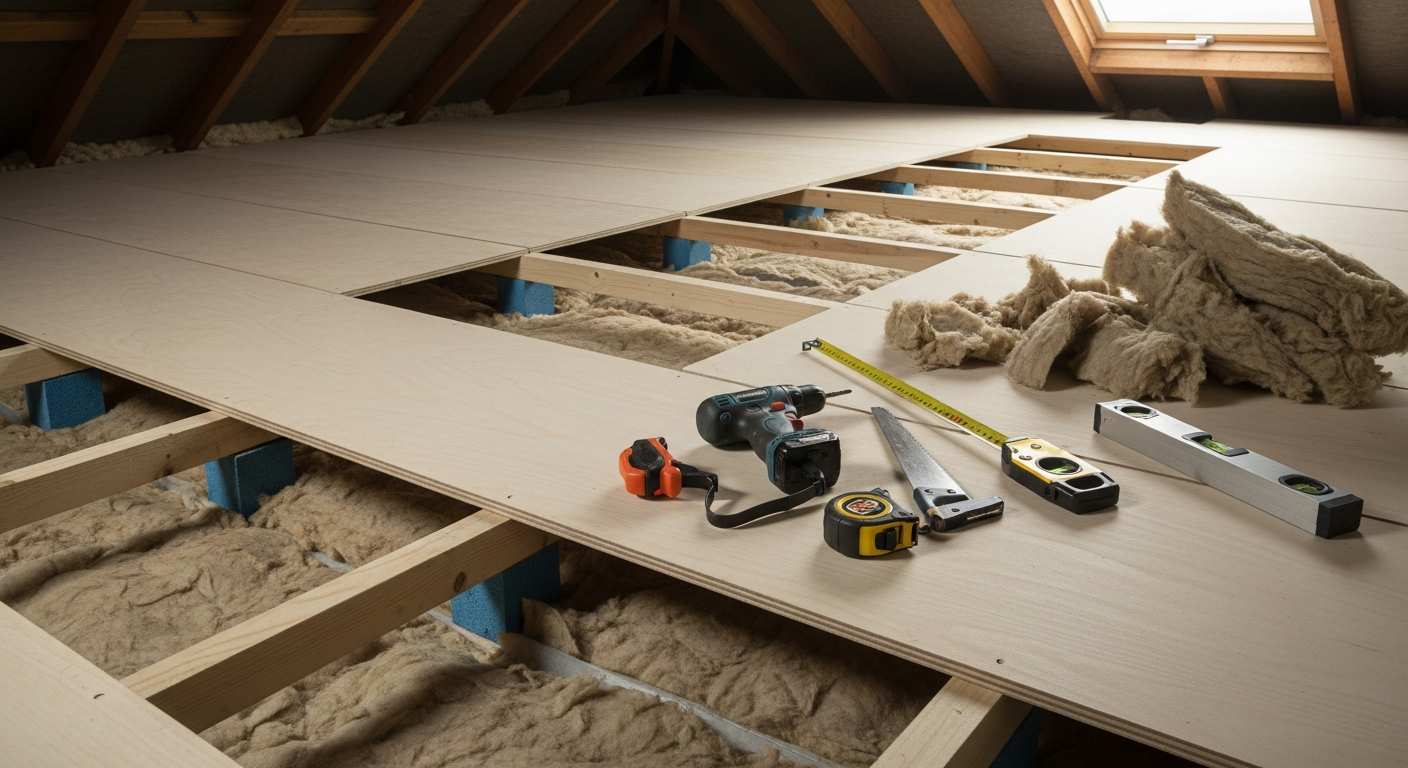
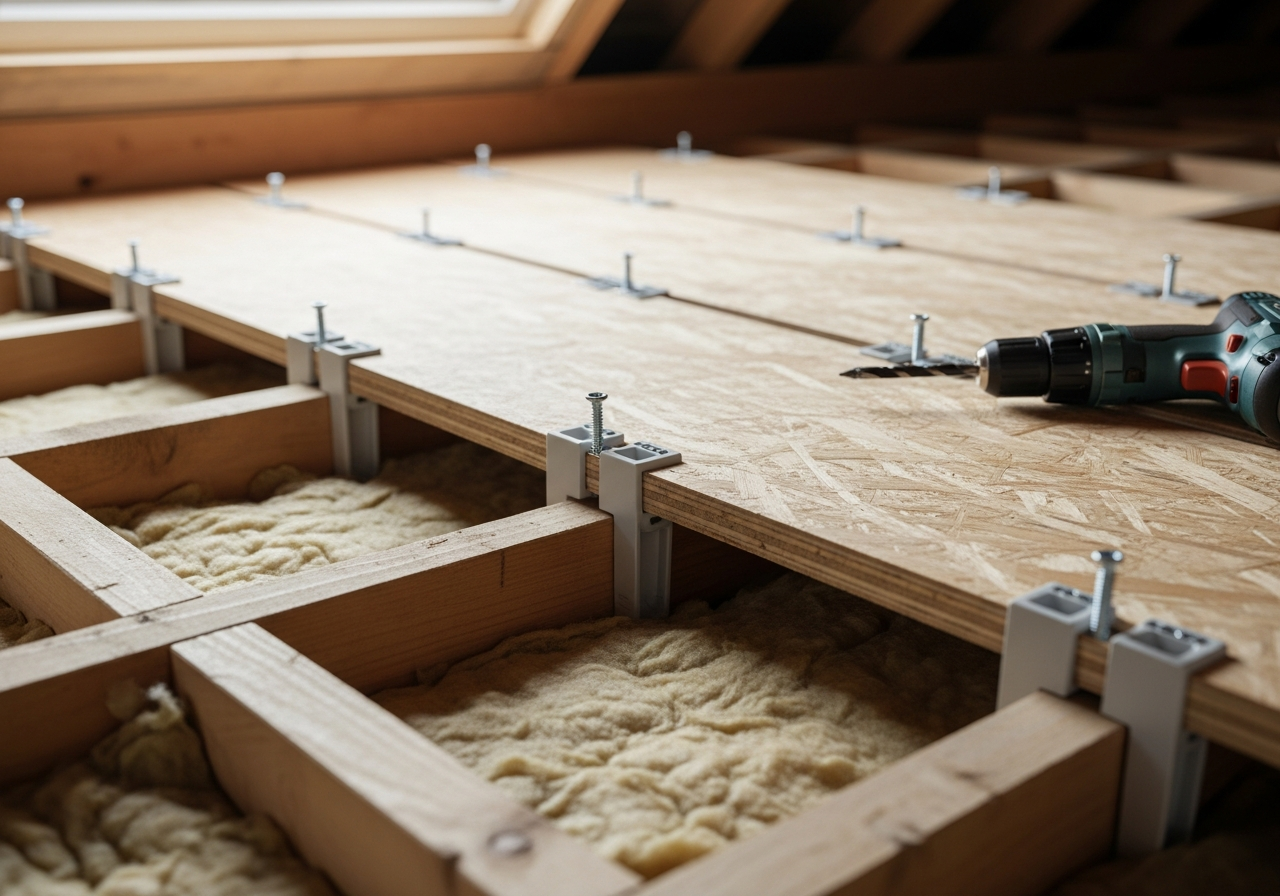
The solution involves raising the storage surface above the insulation level, allowing the thermal layer to work effectively whilst providing stable flooring. This approach requires careful planning of both the support structure and load distribution.
Start by calculating the total height needed. With 270mm insulation plus the depth of your existing joists, you’ll typically need to create a storage level around 350-400mm above the original joist tops. Professional installers use engineered support legs or build framework systems that transfer loads safely to the structural elements below.
Load distribution becomes critical when storing heavier items. Unlike floor joists designed for distributed loads, loft storage systems must transfer concentrated weights through carefully positioned support points. The storage platform needs sufficient strength to prevent sagging, which could compress insulation at the edges and create the thermal problems you’re trying to avoid.
Ventilation requirements also change when you add loft storage. Building regulations require 50mm minimum ventilation gaps at eaves level, and adding storage platforms can disrupt natural airflow patterns. Proper installation maintains these ventilation paths whilst incorporating the storage structure.
Professional Installation vs DIY Approaches
Many homeowners attempt DIY loft storage projects, but the technical requirements often exceed typical DIY skills. The structural calculations alone require understanding of load paths, bearing capacities, and thermal bridge prevention — knowledge that comes from experience with building performance.
Professional installation of raised loft boarding for storage addresses these complexities systematically. Experienced installers assess your specific joist spacing, insulation type, and storage requirements to design appropriate support systems. They understand how different storage loads affect the structure and can modify designs accordingly.
The installation process involves precise measurements, accurate cutting, and careful assembly to maintain structural integrity whilst preserving thermal performance. Professional teams carry the specialist tools needed for working in confined loft spaces and understand the safety requirements for this type of work.
Quality control during installation prevents common problems like inadequate support spacing, insufficient load distribution, or ventilation blockages. These issues often don’t become apparent until after you’ve filled the space with belongings, making corrections expensive and disruptive.
Planning Your Loft Storage Layout
Effective loft storage requires thoughtful planning that considers both current needs and future requirements. Start by mapping the available space, identifying areas with sufficient headroom and structural support potential.
Consider access requirements early in the planning process. Standard loft hatches restrict the size of items you can store, so factor this into your storage strategy. Heavy items need positioning near structural support points, whilst lighter seasonal storage can occupy areas with reduced load capacity.
Think about retrieval patterns when planning storage zones. Items you access frequently should be near the hatch opening, whilst seasonal decorations and archived belongings can go further back. This approach minimises the need to move heavy items when accessing stored goods.
Climate considerations affect what you can safely store in loft spaces. Despite good insulation, temperature variations and potential condensation risks make some items unsuitable for loft storage. Plan your storage categories accordingly, keeping sensitive items in more stable environments.
Key Takeaways
- Never place boards directly on thick modern insulation — compression destroys thermal performance and creates moisture problems
- Raised boarding systems maintain insulation effectiveness whilst providing stable storage platforms
- Professional installation ensures proper load distribution, structural integrity, and building regulation compliance
- Plan storage layout considering access, load requirements, and climate suitability
- Ventilation pathways must remain clear to prevent condensation issues
What Our Customers Say
Trusted by homeowners across Coventry & Warwickshire — here's what they have to say.
"Brilliant service from start to finish. The team were professional, tidy, and explained everything clearly. Our energy bills have dropped noticeably since the new insulation went in."
"Had spray foam removed and mineral wool installed. The surveyor was thorough and honest about what needed doing. Really impressed with the quality of work."
"We had terrible condensation in our loft. They diagnosed the problem quickly, improved the ventilation, and replaced the old insulation. No more damp and the house is noticeably warmer."
Frequently Asked Questions
This depends on your specific joist structure and the support system design. Typical residential loft storage can handle 25kg per square metre for general storage, but concentrated loads require careful positioning over structural supports. Professional assessment determines safe loading for your particular property.
A well-designed raised system accounts for hatch clearance and provides safe access steps or platforms. The height increase is manageable with proper planning, though you might need to consider hatch modifications for very thick insulation installations.
Yes, existing boarding can often be incorporated into a raised system. However, you'll need to assess any compression damage to the insulation and potentially add new material where thermal performance has been compromised. Ready to create safe, effective loft storage that protects your home's thermal performance? Our experienced team can assess your property and design a raised boarding system that meets your storage needs whilst maintaining insulation effectiveness. Contact us today to discuss your requirements and arrange a survey. META_DESCRIPTION: Learn safe loft storage ideas for boarding over insulation. Expert guide covers raised boarding systems, thermal protection & professional Raised Loft Boarding for Storage solutions.
Ready for a Free Survey?
No obligation. We assess your property and provide a detailed quote — usually within 48 hours.