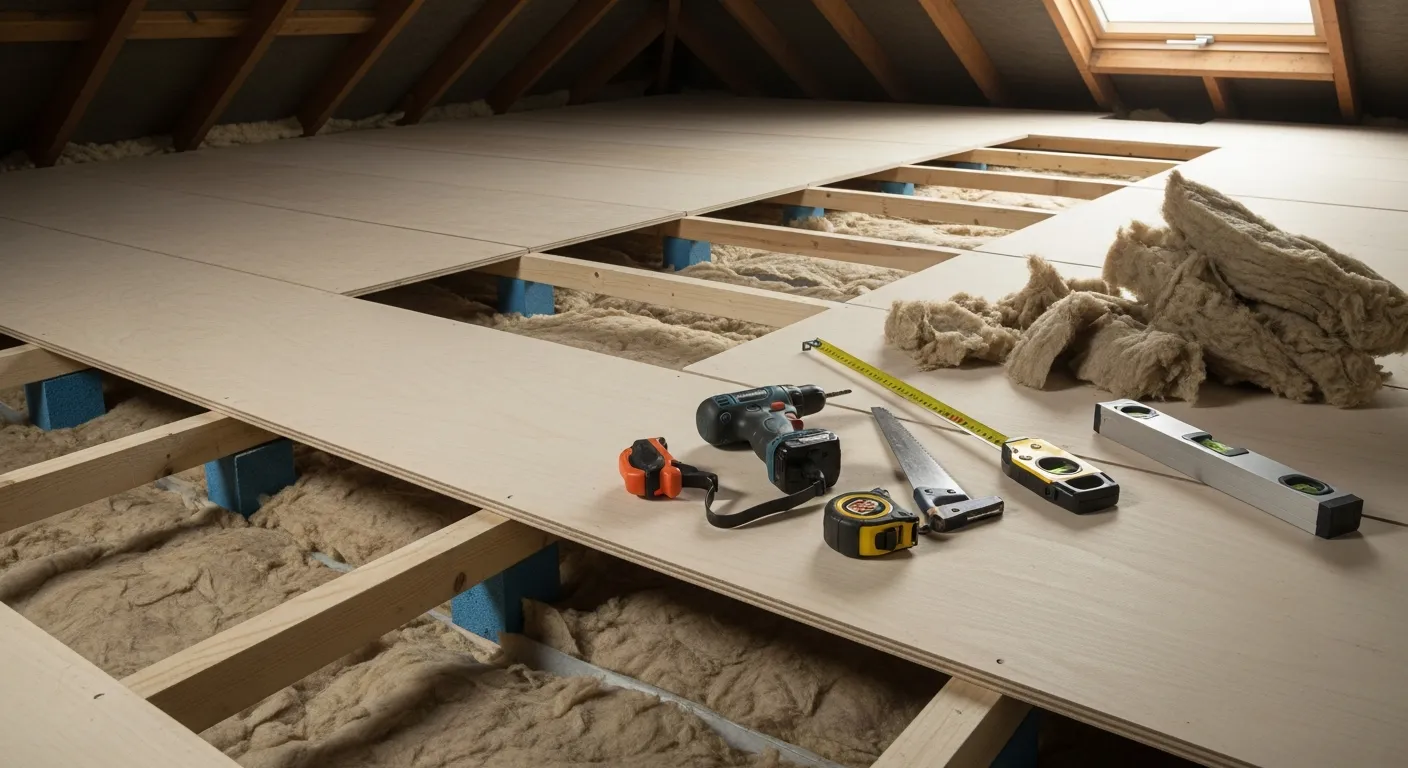
Loft Storage Ideas: Boarding Over Insulation Safely
Transforming your loft into usable storage space is one of the most cost-effective ways to add value and functionality to your home. However, simply...
Loft Storage Ideas: Boarding Over Insulation Safely
Transforming your loft into usable storage space is one of the most cost-effective ways to add value and functionality to your home. However, simply laying boards directly onto existing insulation can compress the thermal layer, reduce its effectiveness, and create long-term problems. The key lies in understanding how to create proper storage whilst maintaining — or even improving — your home’s energy efficiency. With the right approach, you can achieve both goals without compromising either.
Why Standard Boarding Methods Fall Short
Most homeowners instinctively think they can solve storage issues by laying chipboard or plywood directly over their loft insulation. Unfortunately, this approach creates more problems than it solves. Modern building regulations require insulation depths of 270mm or more, but compressing this material under boards reduces its thermal performance dramatically.
When insulation gets compressed to half its intended thickness, it loses approximately 50% of its insulating properties. This means higher heating bills and potential condensation issues as warm air finds new paths through your roof structure. Additionally, walking on compressed insulation can damage the fibres permanently, creating cold spots that persist even after the boards are removed.
The weight distribution also becomes problematic. Standard loft joists — typically 100mm deep — weren’t designed to support distributed loads across their span. Point loading from stored items can cause deflection, cracking in ceiling plasterboard below, and structural concerns over time.
Creating Proper Storage Height Above Insulation
The solution involves creating adequate clearance above your insulation layer before installing any storage platform. This requires raising the boarding system to accommodate the full depth of thermal material whilst providing stable load-bearing capacity.
Professional raised loft boarding systems use a network of support legs that distribute weight evenly across the existing joists. These legs create a secondary framework, typically 170-200mm above the original ceiling joists, allowing space for thick insulation whilst providing a solid base for storage boards.
The support system needs careful planning around existing services. Electrical cables, plumbing runs, and ventilation ducts all require consideration during the design phase. We often find that homes have been rewired or had heating systems updated since construction, creating a complex network of services that needs protecting whilst maintaining accessibility for future maintenance.
Proper ventilation becomes crucial once you’re creating enclosed spaces above insulation. The raised system must include pathways for air movement from eaves to ridge, preventing moisture buildup that could damage both stored items and the roof structure itself.
Material Selection and Load Calculations
Choosing appropriate materials depends on your intended storage use and the structural capacity of your existing roof. Standard domestic loft joists can typically support 0.25kN/m² for infrequent access storage, but this varies significantly based on span, timber grade, and spacing.
Support leg systems usually employ either steel adjustable feet or engineered timber posts. Steel systems offer greater strength and adjustability but require careful installation to avoid thermal bridging. Timber systems provide natural insulation properties but need proper treatment and sizing calculations.
The boarding itself ranges from moisture-resistant chipboard through to structural plywood and specialist loft boards. Thicker materials span greater distances between supports but add weight to the overall system. We typically recommend 18-22mm tongue and groove boards for domestic storage applications, providing good strength-to-weight ratios.
Access considerations often get overlooked during planning. Your new storage level needs safe entry and exit points, adequate headroom for movement, and potentially artificial lighting. The raised height means existing loft ladders may need extending or replacing with more substantial access systems.
Professional Installation Benefits and Considerations
While some homeowners attempt DIY approaches, professional installation offers significant advantages beyond just convenience. Structural calculations, building regulation compliance, and safety considerations all require specialist knowledge that comes from experience across different property types.
Our raised loft boarding service includes comprehensive surveys to assess existing joist capacity, insulation condition, and service routing. We can identify potential issues — like inadequate ventilation or electrical safety concerns — before they become expensive problems during or after installation.
The installation process itself requires careful sequencing. Existing insulation often needs temporary displacement, services may require rerouting, and the support system must be installed without damaging ceiling finishes below. Professional teams bring the right tools and techniques to complete this work efficiently whilst maintaining your home’s thermal performance.
Quality assurance extends beyond installation day. Professional systems come with warranties covering both materials and workmanship, giving you confidence in the long-term performance of your investment. We also provide guidance on loading limits and maintenance requirements to ensure your storage space serves you well for years to come.
Key Takeaways
- Never compress insulation under storage boards — it dramatically reduces thermal performance and can cause permanent damage
- Raised boarding systems maintain insulation effectiveness whilst creating usable storage space above the thermal layer
- Professional installation ensures structural safety, building regulation compliance, and optimal long-term performance
- Material selection and load calculations must account for your specific roof structure and intended storage use
- Proper ventilation and service protection are essential elements that require careful planning during installation
What Our Customers Say
Trusted by homeowners across Coventry & Warwickshire — here's what they have to say.
"Brilliant service from start to finish. The team were professional, tidy, and explained everything clearly. Our energy bills have dropped noticeably since the new insulation went in."
"Had spray foam removed and mineral wool installed. The surveyor was thorough and honest about what needed doing. Really impressed with the quality of work."
"We had terrible condensation in our loft. They diagnosed the problem quickly, improved the ventilation, and replaced the old insulation. No more damp and the house is noticeably warmer."
Frequently Asked Questions
While basic DIY skills can handle simple installations, raised boarding systems require structural calculations, building regulation knowledge, and specialist tools. Professional installation ensures safety compliance and optimal performance whilst typically including warranties on materials and workmanship.
Weight capacity depends on your existing joist structure, spans, and the support system design. Typical domestic installations can handle 0.25-0.5kN/m², equivalent to standard household storage boxes, but this requires professional assessment of your specific roof structure and proper system design.
Most raised loft boarding installations fall under permitted development and don't require planning permission. However, significant structural alterations may need building control notification. Check with your insurer about modifications — most view proper storage installations favourably as they can reduce damage risk from items stored inappropriately. --- Ready to create safe, efficient loft storage that protects your insulation? Contact us for a comprehensive survey and quote. We'll assess your roof structure, design a system that meets your needs, and install everything to professional standards with full warranty protection.
Ready for a Free Survey?
No obligation. We assess your property and provide a detailed quote — usually within 48 hours.