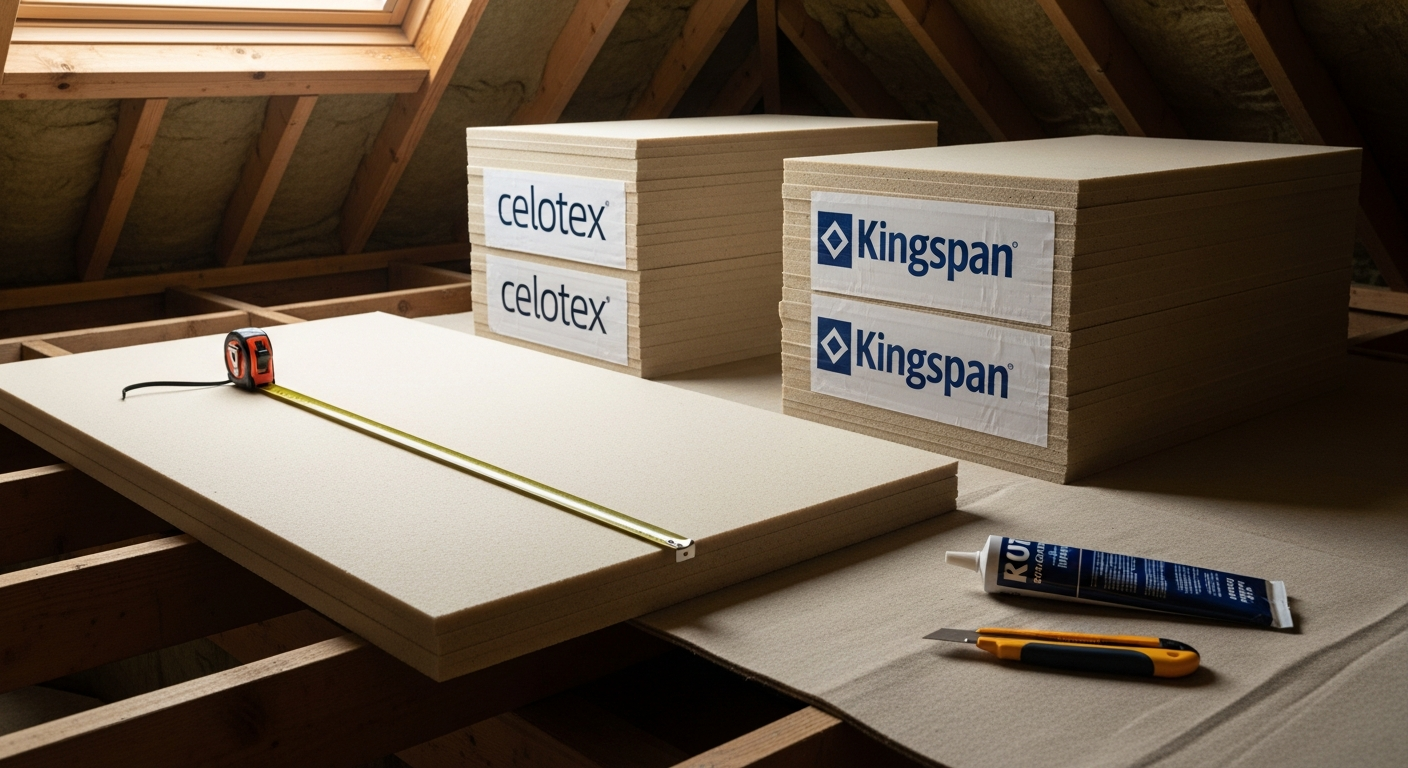
Celotex vs Kingspan: Which PIR Board Is Best?
Compare Celotex vs Kingspan PIR boards: performance, cost, and application differences. Expert guide helps choose the best option for your PIR Rigid Insulation Board Fitting project.
Celotex vs Kingspan: Which PIR Board Is Best?
When choosing PIR (polyisocyanurate) board insulation for your home, you’ll quickly encounter two industry giants: Celotex and Kingspan. Both manufacturers produce high-quality rigid foam boards that deliver excellent thermal performance, but subtle differences in manufacturing, properties, and cost can influence which works best for your project. Understanding these distinctions helps you make an informed choice that balances performance, budget, and specific installation requirements.
Understanding PIR Board Fundamentals
PIR boards are rigid foam insulation panels with exceptional thermal properties. Both Celotex and Kingspan use similar core materials — polyisocyanurate foam sandwiched between facing materials — but their manufacturing processes and additives create distinct characteristics.
The thermal conductivity of both brands typically ranges from 0.020 to 0.025 W/mK, making them among the most thermally efficient insulation materials available. This means a 100mm PIR board can achieve similar thermal performance to 200mm+ of traditional materials like mineral wool. For homeowners working with limited space or trying to meet Building Regulations Part L requirements, this efficiency proves invaluable.
Fire performance also sets PIR apart from other foam boards. Both manufacturers produce boards that achieve Class B fire ratings, with some variants reaching Class A. This makes them suitable for cavity wall applications and other locations where fire safety is paramount.
Manufacturing Differences That Matter
Kingspan and Celotex take slightly different approaches to manufacturing their PIR boards. Kingspan’s production process tends to create a more consistent cell structure within the foam core, which can translate to marginally better thermal stability over time. Their boards often maintain their stated thermal conductivity values more reliably as they age.
Celotex focuses on versatility in their manufacturing approach, producing a broader range of board types and thicknesses. Their production methods allow for more specialised variants, including boards designed specifically for different applications like roof insulation or floor insulation.
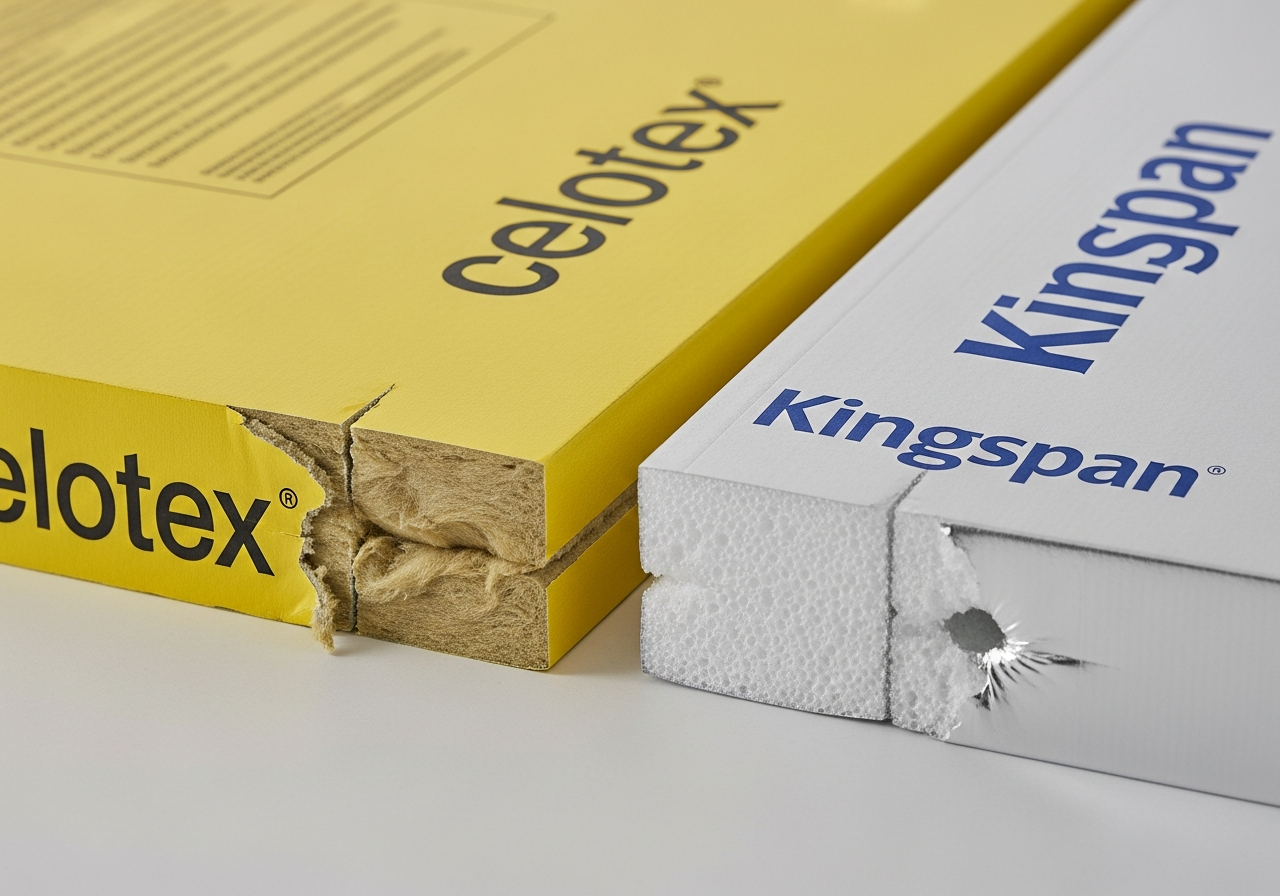
The facing materials also differ between brands. Kingspan typically uses aluminium facings on their standard boards, whilst Celotex offers various facing options including foil, tissue, and composite facings. These facings affect vapour permeability, ease of installation, and compatibility with different building methods.
Quality control processes vary too. Kingspan operates under strict consistency protocols that result in very uniform boards, whilst Celotex’s broader product range means their quality control adapts to different product specifications. Both meet British Standards, but installers often notice handling differences between the brands.
Performance Comparison in Real Applications
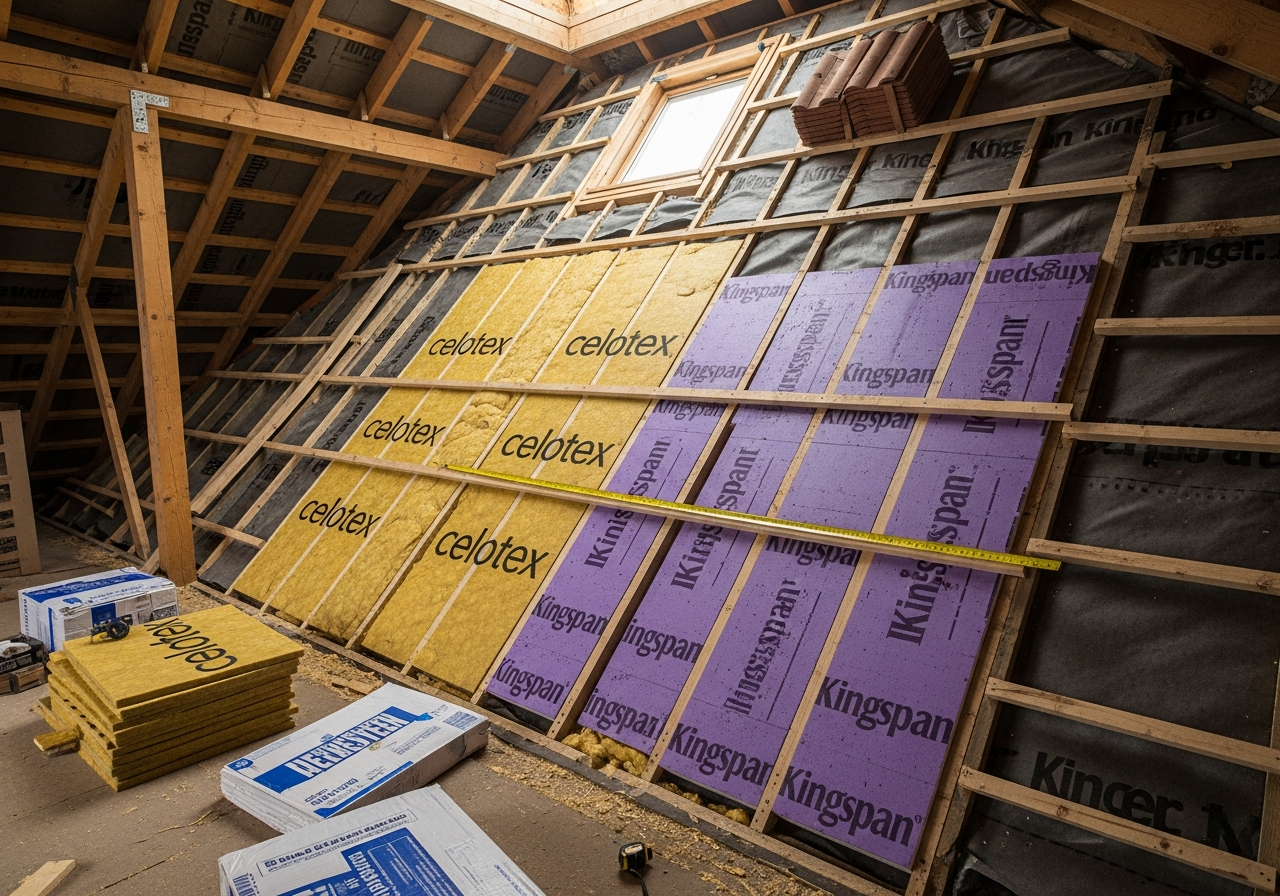
In practical installations, both brands perform exceptionally well, but specific applications may favour one over the other. For roof applications, Celotex’s lighter-weight variants can reduce structural loading whilst maintaining thermal performance. Their GA4000 range, for example, works particularly well in pitched roof installations where weight matters.
Kingspan’s boards often excel in cavity wall applications where dimensional stability is crucial. Their manufacturing process creates boards that resist bowing and maintain straight edges better over time, which matters when fitting between wall studs or in masonry cavities.
Moisture resistance shows minimal differences between the brands under normal conditions, but Kingspan’s cell structure typically performs slightly better in extremely humid environments. For most UK applications, this difference won’t be noticeable, but it can matter in specific circumstances like unheated outbuildings or areas prone to condensation.
When we install PIR Rigid Insulation Board Fitting projects, we find that both brands cut cleanly and install similarly. However, Celotex boards sometimes compress slightly more during cutting, whilst Kingspan boards tend to maintain their edge profiles better. These are subtle differences that experienced installers notice but rarely affect the final performance.
Cost Considerations and Availability
Price differences between Celotex and Kingspan fluctuate based on market conditions, but Celotex generally costs slightly less per square metre. However, this doesn’t automatically make it the better value option. The specific application, required thickness, and local availability all influence the total project cost.
Kingspan’s premium positioning means their boards sometimes command higher prices, particularly for specialised variants. However, their consistent quality can reduce installation time and waste, potentially offsetting the higher material cost on larger projects.
Availability varies by region and supplier. Celotex has broader distribution networks across the UK, making it easier to source quickly for urgent projects. Kingspan products are widely available too, but specific variants might require longer lead times.
Trade prices can differ significantly from retail prices for both brands. Professional installers often have access to better pricing on both products, which affects the overall project cost more than the list price differences between brands.
Key Takeaways
• Both Celotex and Kingspan produce high-quality PIR boards with similar thermal performance • Kingspan typically offers more consistent manufacturing and better dimensional stability • Celotex provides broader product ranges and generally lower costs • Application-specific factors often matter more than brand differences • Professional installation ensures optimal performance regardless of brand choice
What Our Customers Say
Trusted by homeowners across Coventry & Warwickshire — here's what they have to say.
"Brilliant service from start to finish. The team were professional, tidy, and explained everything clearly. Our energy bills have dropped noticeably since the new insulation went in."
"Had spray foam removed and mineral wool installed. The surveyor was thorough and honest about what needed doing. Really impressed with the quality of work."
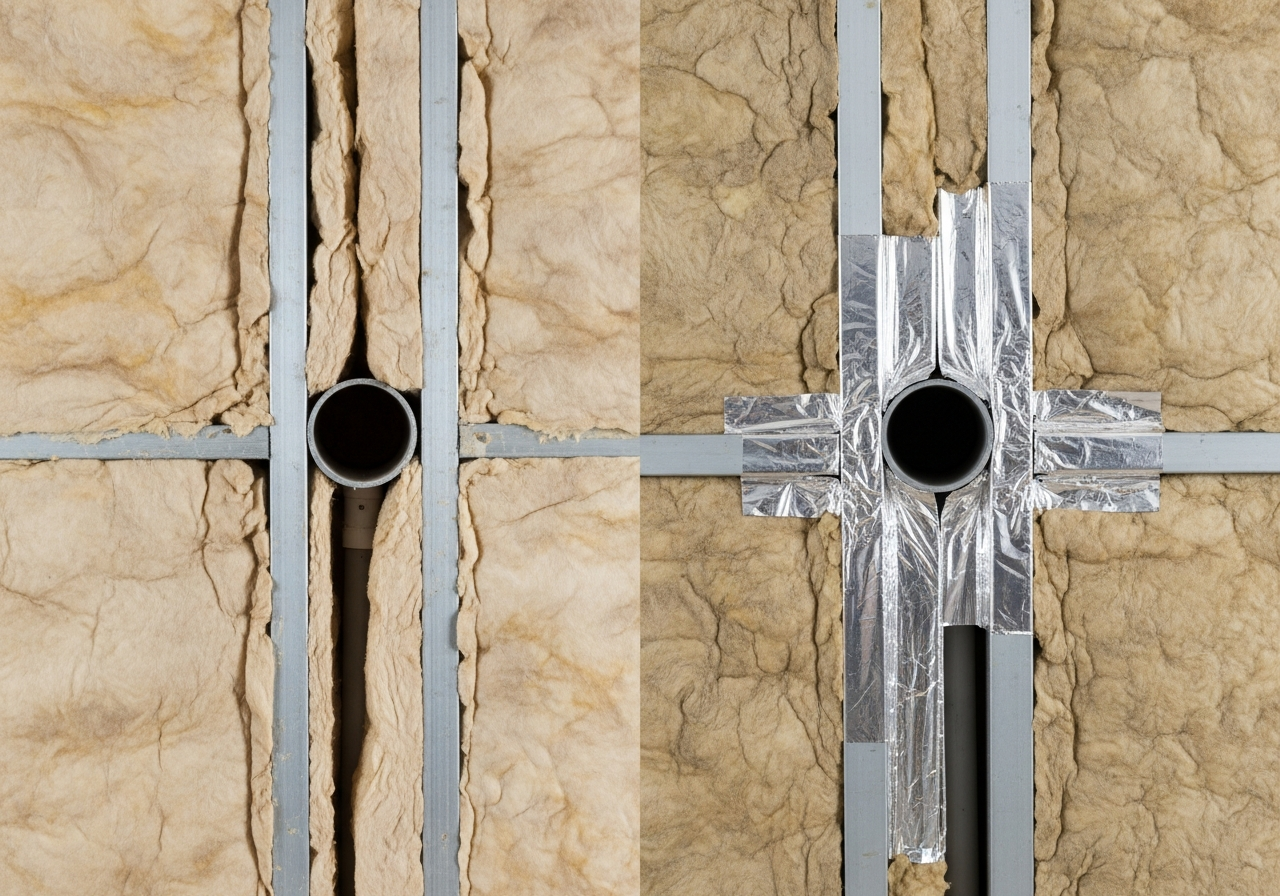
"We had terrible condensation in our loft. They diagnosed the problem quickly, improved the ventilation, and replaced the old insulation. No more damp and the house is noticeably warmer."
Frequently Asked Questions
Generally yes, Celotex boards cost slightly less per square metre than equivalent Kingspan products. However, total project costs depend on specific requirements, availability, and trade pricing. The performance differences are minimal for most applications, making cost a reasonable deciding factor.
Both brands achieve similar thermal conductivity values (typically 0.020-0.025 W/mK) in comparable thickness ranges. The practical thermal performance difference is negligible for most residential applications. Building Regulations compliance is achievable with either brand when properly specified.
Yes, both brands use compatible materials and installation methods. However, mixing brands within the same insulation layer isn't recommended as slight thickness variations can create thermal bridges. Using different brands in separate areas of the same project poses no technical issues. Ready to upgrade your home's insulation with professional PIR board installation? We'll assess your specific requirements and recommend the most suitable product for your project, whether that's Celotex, Kingspan, or another high-performance option. Contact us today for expert advice and a detailed quote tailored to your property. META_DESCRIPTION: Compare Celotex vs Kingspan PIR boards: performance, cost, and application differences. Expert guide helps choose the best option for your PIR Rigid Insulation Board Fitting project.
Ready for a Free Survey?
No obligation. We assess your property and provide a detailed quote — usually within 48 hours.