Is Cellulose Insulation Right for Your Home?
With energy bills continuing to rise and environmental concerns at the forefront of many homeowners' minds, choosing the right loft insulation has never...
Is Cellulose Insulation Right for Your Home?
With energy bills continuing to rise and environmental concerns at the forefront of many homeowners’ minds, choosing the right loft insulation has never been more important. Cellulose insulation — made from recycled paper and treated with fire retardants — has gained popularity as an eco-friendly alternative to traditional mineral wool. But like any insulation material, it comes with both advantages and potential drawbacks that are worth understanding before making your decision.
The Environmental Benefits of Recycled Paper Insulation
One of cellulose insulation’s strongest selling points is its environmental credentials. Made predominantly from recycled newspaper and cardboard, this material diverts waste from landfill whilst providing effective thermal performance. The manufacturing process requires significantly less energy compared to producing glass wool or rock wool alternatives.
From a carbon footprint perspective, cellulose performs exceptionally well. The recycled content means fewer raw materials need extraction, and the relatively simple production process results in lower embedded carbon. For homeowners prioritising sustainable building practices, these environmental advantages make cellulose an attractive option.
The material also offers good breathability, allowing moisture vapour to pass through rather than trapping it within the insulation layer. This characteristic helps maintain healthy humidity levels in your loft space and reduces the risk of condensation-related issues.
Thermal Performance and Installation Considerations
When it comes to keeping your home warm, cellulose insulation delivers solid thermal performance. With typical R-values ranging from 3.6 to 3.8 per inch, it compares favourably with other blown-in materials. The fibrous structure creates numerous tiny air pockets that effectively resist heat transfer.
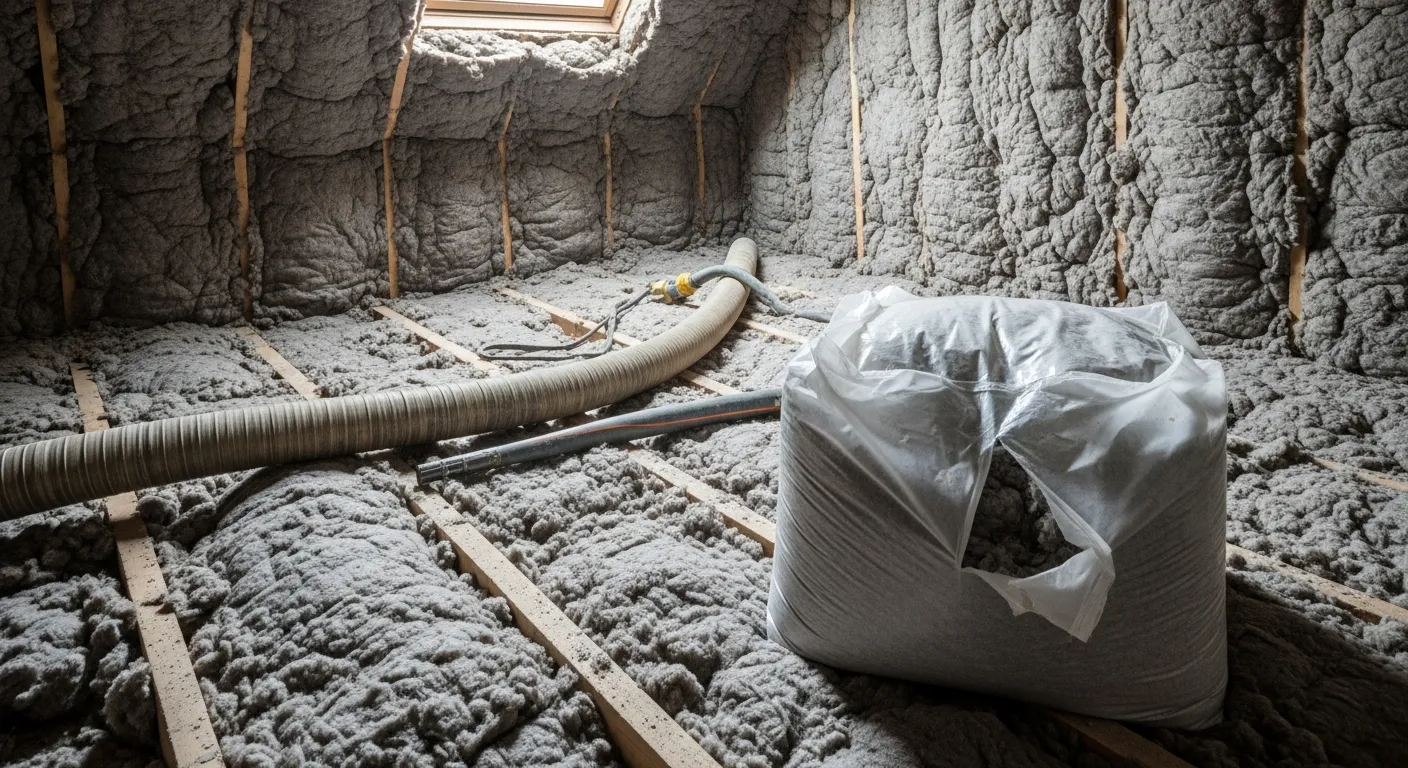
One significant advantage is how well cellulose fills gaps and awkward spaces. Unlike rigid boards or batts that can leave thermal bridges, blown-in cellulose settles into every nook and cranny, creating a continuous thermal barrier. This comprehensive coverage helps eliminate cold spots that can occur with other insulation types.
However, settlement is something to consider. Over time, cellulose can compress slightly, potentially reducing its thermal effectiveness. Quality installation techniques and proper density calculations help minimise this issue, but it’s worth factoring into your long-term expectations.
The installation process itself is relatively quick and clean when carried out properly. Our blown-in cellulose loft insulation service typically takes just a few hours for an average-sized home, with minimal disruption to your daily routine.
Moisture Management and Fire Safety
Despite being made from paper, properly treated cellulose insulation performs well in terms of fire resistance. The boric acid treatment acts as a fire retardant, helping the material meet building regulations for loft insulation applications. This treatment also provides protection against pests, which can be an additional benefit in roof spaces.
Moisture handling requires careful consideration. Whilst cellulose can absorb moisture without immediately losing its insulating properties, excessive dampness can lead to problems. Proper ventilation in your loft space remains crucial, regardless of insulation type. If your roof has leaks or ventilation issues, these should be addressed before installing any insulation material.
The material’s ability to manage humidity can actually work in your favour during minor moisture events. Unlike some synthetic insulations that can become waterlogged, cellulose can dry out whilst maintaining much of its thermal performance. However, this shouldn’t be seen as a solution to underlying moisture problems.
Cost Considerations and Long-term Value
Price-wise, cellulose insulation typically sits in the middle range of available options. It’s generally more expensive than basic mineral wool but less costly than some premium eco-friendly alternatives. The blown-in application method can affect overall project costs, as it requires specialised equipment and experienced installation teams.
When evaluating value, consider both upfront costs and long-term performance. Quality cellulose insulation should provide decades of effective thermal performance when properly installed. The environmental benefits may also appeal to buyers if you’re considering future property sales, as eco-friendly features increasingly influence purchasing decisions.
Maintenance requirements are minimal once installed. Unlike some insulation types that may need periodic checks or adjustments, cellulose typically performs consistently over its lifespan with little intervention required.
Key Takeaways
• Cellulose insulation offers excellent environmental credentials through high recycled content and lower manufacturing energy requirements • Thermal performance is solid, with effective gap-filling properties that create comprehensive coverage • Fire resistance and pest protection come from boric acid treatment, meeting building regulation requirements • Moisture management requires proper loft ventilation, but the material handles minor dampness better than some alternatives • Cost sits in the middle range, offering good long-term value for environmentally conscious homeowners
What Our Customers Say
Trusted by homeowners across Coventry & Warwickshire — here's what they have to say.
"Brilliant service from start to finish. The team were professional, tidy, and explained everything clearly. Our energy bills have dropped noticeably since the new insulation went in."
"Had spray foam removed and mineral wool installed. The surveyor was thorough and honest about what needed doing. Really impressed with the quality of work."
"We had terrible condensation in our loft. They diagnosed the problem quickly, improved the ventilation, and replaced the old insulation. No more damp and the house is noticeably warmer."
Frequently Asked Questions
Properly installed cellulose insulation typically lasts 20-30 years or more. The material is stable and doesn't degrade significantly over time, though some minor settling may occur in the first few years after installation.
Modern cellulose insulation is generally safe when properly manufactured and installed. The boric acid treatment is non-toxic in the quantities used, and the material doesn't release harmful fibres like some traditional insulations might.
Cellulose works well in most UK loft spaces, but homes with persistent moisture issues or inadequate ventilation may need these problems addressed first. A proper assessment of your specific situation is always recommended. --- Ready to explore whether cellulose insulation is the right choice for your home? We'll assess your loft space, discuss your priorities, and provide honest advice about the best approach for your specific situation. Get in touch today to arrange your free survey and quote.
Ready for a Free Survey?
No obligation. We assess your property and provide a detailed quote — usually within 48 hours.