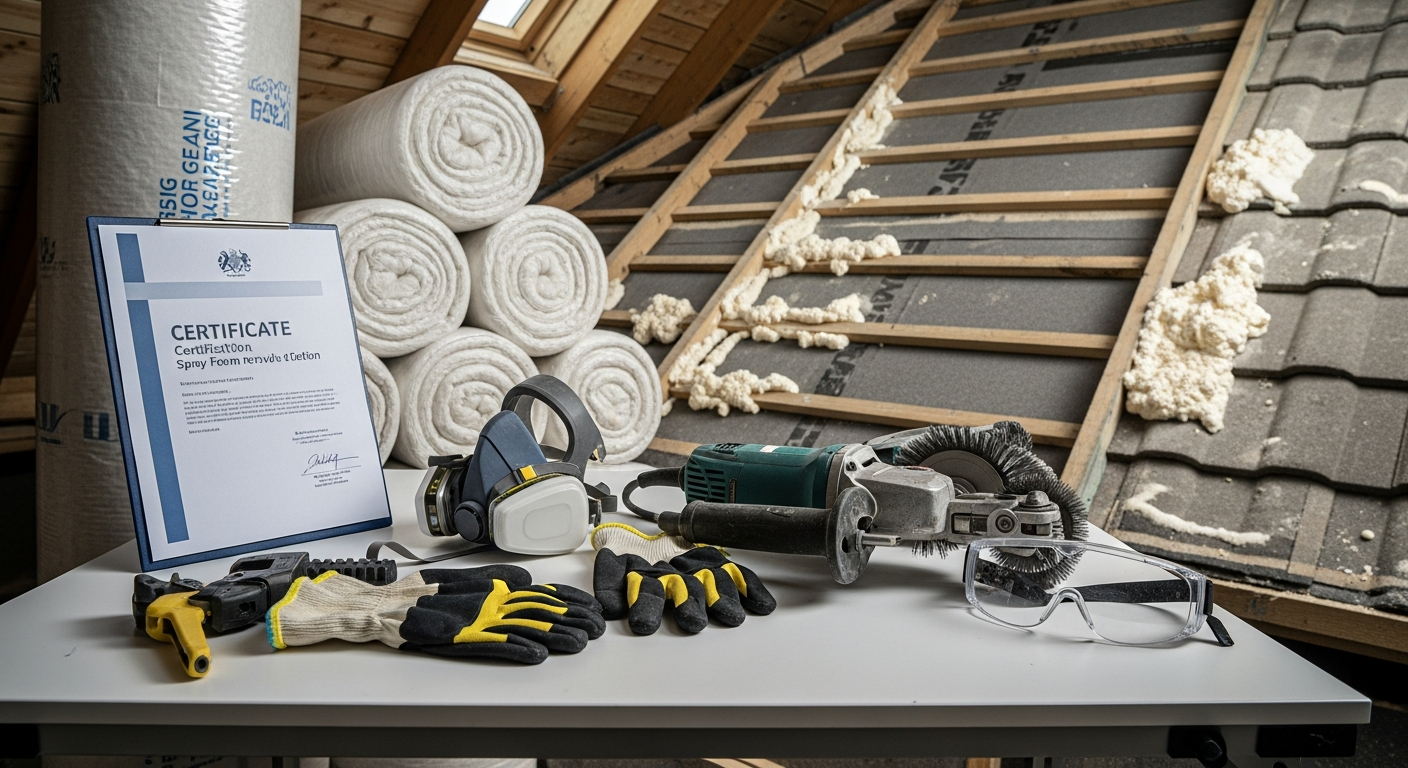
Understanding Spray Foam Removal Certification
Learn what spray foam removal certification means for homeowners. Understand why certified contractors matter for safe removal and property protection with our guide.
Understanding Spray Foam Removal Certification
When foam insulation needs removing from your property, certification becomes a crucial consideration. Many homeowners discover that improper removal attempts can lead to extensive damage, contamination, and significant additional costs. Understanding what removal certification means — and why it matters — helps protect your property and ensures the work meets proper standards. The right certification demonstrates that contractors have the training, equipment, and knowledge to handle potentially hazardous materials safely.
What Does a Foam Removal Certificate Actually Mean?
A foam removal certificate indicates that a contractor has completed specific training on safely removing spray foam insulation. This isn’t just about pulling foam off surfaces — certified professionals understand how different foam types react during removal, which chemicals may be present, and how to protect both occupants and the structure during the process.
The certification typically covers identification of foam types, proper containment procedures, appropriate removal techniques, and safe disposal methods. Certified contractors learn to recognise when foam contains harmful chemicals like formaldehyde or isocyanates, which can pose serious health risks if disturbed incorrectly.
Most legitimate certification programmes require hands-on training, written examinations, and ongoing education to maintain credentials. This ensures contractors stay current with evolving safety standards and removal techniques.
Why Certification Matters for Your Property
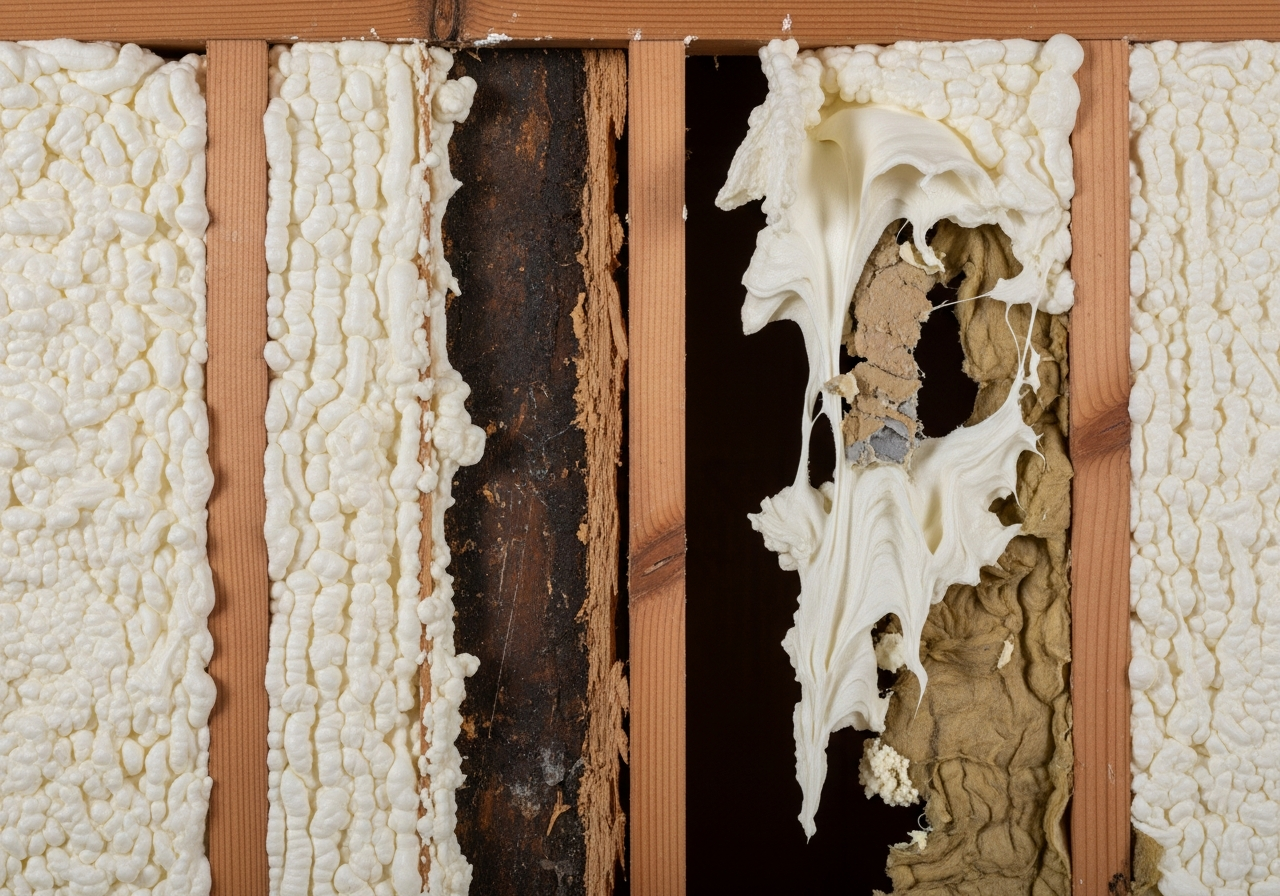
Uncertified foam removal often creates more problems than it solves. We’ve seen properties where well-meaning contractors attempted removal without proper training, resulting in chemical contamination throughout the building, structural damage from aggressive removal methods, and incomplete removal that left problematic residue.
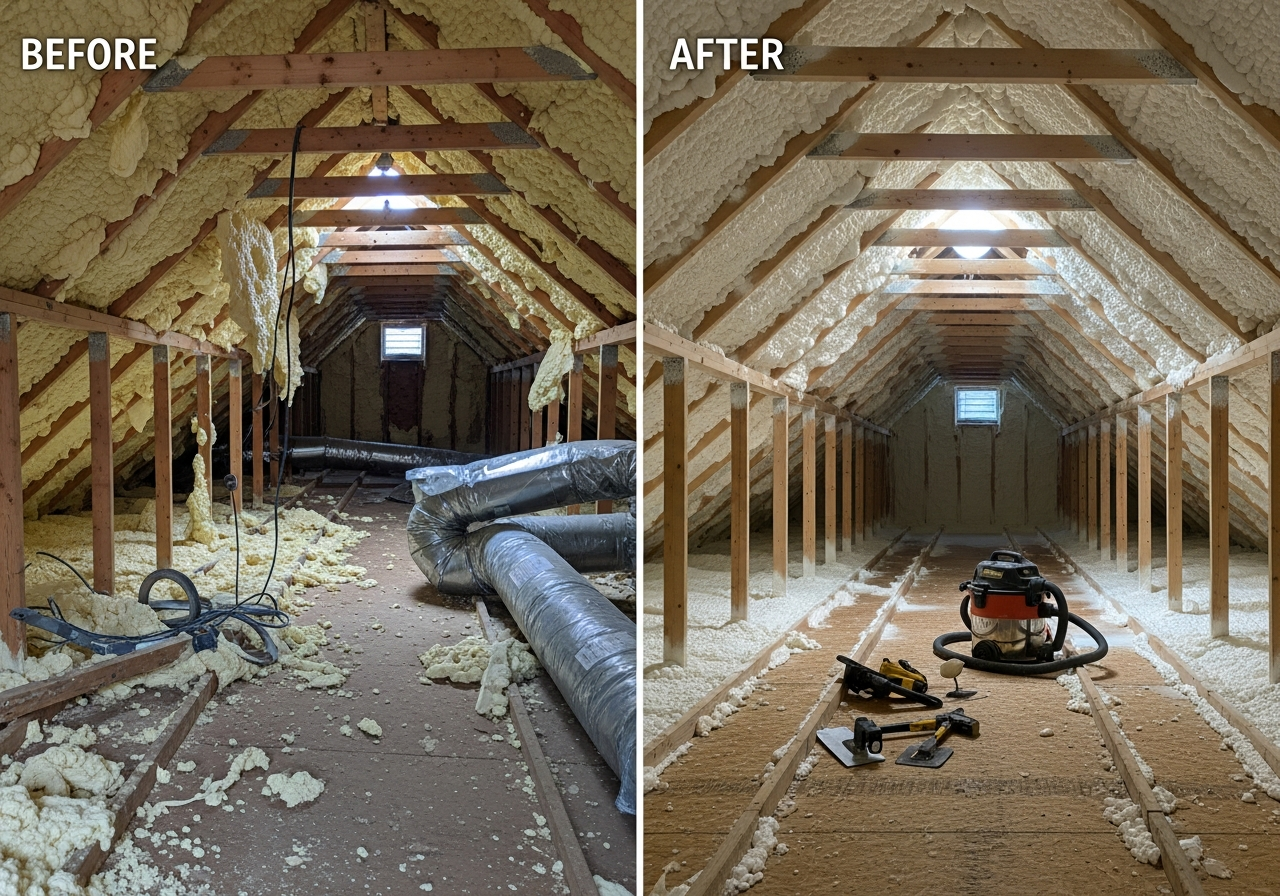
Certified professionals use specialised equipment to contain work areas, preventing contamination from spreading. They understand which solvents and removal agents work effectively without damaging underlying materials. Perhaps most importantly, they can identify when foam removal isn’t advisable — sometimes encapsulation or other approaches prove more suitable.
Insurance considerations also matter. Many insurers require certified contractors for foam removal work, particularly when health concerns exist. Using uncertified contractors could void coverage or create liability issues if problems arise later.
Health and Safety Requirements
Foam removal often involves exposure to potentially harmful substances. Older foam systems may contain chemicals that weren’t fully understood when installed, while even newer foams can release irritating particles when disturbed.
Certified contractors follow strict health and safety protocols. They use appropriate respiratory protection, establish proper ventilation, and employ containment barriers to protect unaffected areas. They’re trained to recognise symptoms of chemical exposure and know when to stop work if conditions become unsafe.
Proper disposal represents another critical aspect. Removed foam often qualifies as hazardous waste, requiring specific disposal methods and documentation. Certified contractors understand these requirements and ensure compliance with environmental regulations.
Finding the Right Certified Professional
Not all certifications carry equal weight. Look for contractors certified through recognised industry bodies or training organisations with established reputations. Ask to see actual certificates and verify credentials through the issuing organisation.
Experience matters alongside certification. A newly certified contractor may understand the theory but lack practical experience with challenging situations. Look for professionals who combine proper certification with demonstrated experience in foam removal projects.
Our Spray Foam Removal Certification service ensures our team maintains current credentials and follows best practices for safe, effective foam removal throughout Coventry and Warwickshire.
Key Takeaways
• Foam removal certification demonstrates training in safe removal techniques, chemical handling, and proper disposal methods • Certified contractors protect your property from contamination and structural damage during removal processes • Insurance coverage often requires certified professionals for foam removal work • Proper health and safety protocols prevent exposure to harmful chemicals and particles • Experience combined with certification provides the best protection for your property investment

What Our Customers Say
Trusted by homeowners across Coventry & Warwickshire — here's what they have to say.
"Brilliant service from start to finish. The team were professional, tidy, and explained everything clearly. Our energy bills have dropped noticeably since the new insulation went in."
"Had spray foam removed and mineral wool installed. The surveyor was thorough and honest about what needed doing. Really impressed with the quality of work."
"We had terrible condensation in our loft. They diagnosed the problem quickly, improved the ventilation, and replaced the old insulation. No more damp and the house is noticeably warmer."
Frequently Asked Questions
Most certifications require renewal every 2-3 years through continuing education or re-examination. This ensures contractors stay current with evolving safety standards and removal techniques. Always ask contractors when their certification expires.
While not legally prohibited for your own property, removing foam without proper training and equipment risks chemical exposure, property damage, and incomplete removal. The health and safety risks usually outweigh any cost savings.
Insurance claims may be denied if uncertified contractors cause damage during foam removal. You could face significant repair costs and potential liability issues if health problems arise from improper removal techniques. If you're considering foam removal for your property, don't take risks with uncertified contractors. Contact us to discuss your requirements and ensure the work meets proper safety standards from start to finish. META_DESCRIPTION: Learn what spray foam removal certification means for homeowners. Understand why certified contractors matter for safe removal and property protection with our guide.
Ready for a Free Survey?
No obligation. We assess your property and provide a detailed quote — usually within 48 hours.