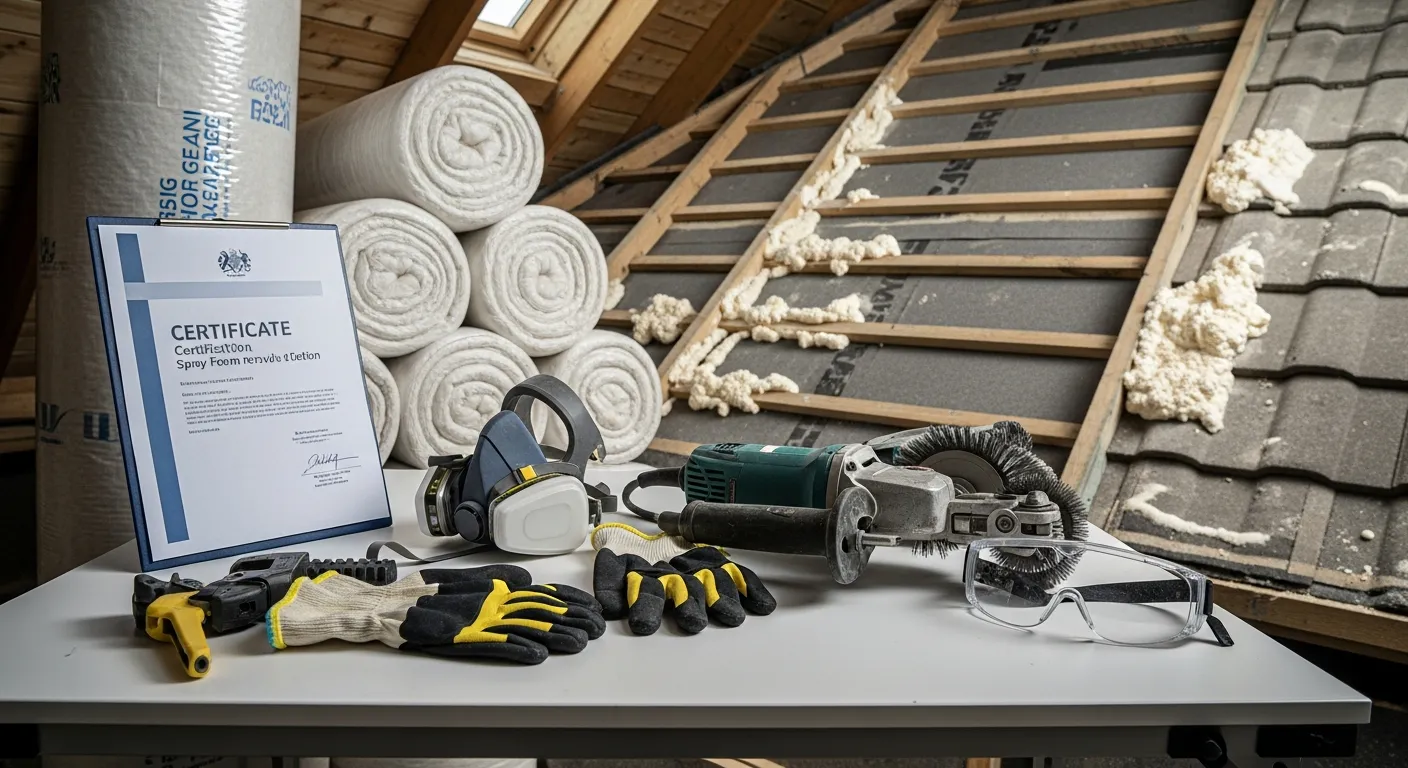
Understanding Spray Foam Removal Certification
When spray foam insulation goes wrong — whether from poor installation, contamination, or improper curing — the removal process requires specialist...
Understanding Spray Foam Removal Certification
When spray foam insulation goes wrong — whether from poor installation, contamination, or improper curing — the removal process requires specialist knowledge and certification. Many homeowners don’t realise that removing spray foam isn’t simply a matter of scraping it off. The work involves understanding material properties, safety protocols, and building regulations. Certified contractors have demonstrated competency in these critical areas, ensuring your property is handled correctly and safely during what can be a complex remediation process.
What Foam Removal Certification Actually Covers
A foam removal certificate demonstrates that a contractor has received formal training in the safe and effective removal of polyurethane foam insulation systems. This certification covers multiple technical areas that directly impact your property’s safety and structural integrity.
The training typically includes understanding different foam types and their chemical compositions, proper removal techniques that won’t damage underlying structures, and contamination identification protocols. Certified contractors learn to recognise when foam has cured incorrectly, creating potential health hazards or structural concerns that require specific handling procedures.
Safety protocols form a major component of certification programmes. This includes proper ventilation requirements during removal, personal protective equipment standards, and containment methods to prevent contamination spreading to other areas of your home. The certification also covers waste disposal requirements, as removed spray foam must be handled according to environmental regulations.
Why Standard Building Knowledge Isn’t Enough
Removing spray foam requires understanding that goes well beyond general construction experience. Uncertified contractors often underestimate the complexity involved, leading to incomplete removal, structural damage, or safety hazards that can cost thousands to rectify.
Different foam formulations react differently to removal methods. What works for one type might be completely ineffective — or potentially dangerous — for another. Certified contractors understand these variations and can identify the specific foam type in your property before beginning work. This knowledge prevents damage to timber frames, masonry, or other structural elements during the removal process.
The health and safety aspects cannot be overstated. Improperly removed foam can release particles or chemical residues that affect indoor air quality long after the work is completed. Certified contractors know how to test for these issues and implement appropriate containment measures throughout the process.
Regulatory Requirements and Standards
In the UK, spray foam removal work must comply with Construction Design and Management (CDM) regulations when it forms part of larger construction projects. Additionally, the work often falls under waste management legislation, requiring proper classification and disposal of removed materials.
Building control notification may be required if the removal affects structural elements or involves significant remedial work to roof spaces or wall cavities. Certified contractors understand these regulatory requirements and can advise whether your specific project needs formal approval before work begins.
Insurance considerations also play a role. Many insurers require evidence of proper certification when covering claims related to spray foam issues. Having certified contractors handle the removal helps ensure your insurance coverage remains valid and any future claims won’t be disputed on technical grounds.
Long-term Quality Assurance Benefits
Professional certification provides ongoing accountability that protects homeowners long after the immediate removal work is completed. Certified contractors typically offer guarantees on their work and maintain professional indemnity insurance that covers potential issues arising from the removal process.
The documentation provided by certified contractors creates a clear record of what was removed, why it was necessary, and what remedial work was completed. This paperwork becomes valuable if you later sell the property or need to demonstrate to insurers that problems were properly addressed by qualified professionals.
Our spray foam removal certification service ensures all removal work meets these professional standards, providing you with confidence that the job is completed correctly and safely from start to finish.
Key Takeaways
• Foam removal certification covers technical knowledge, safety protocols, and regulatory compliance that standard builders typically lack
• Different foam types require specific removal approaches — certified contractors can identify and handle these variations safely
• Proper certification ensures compliance with UK building regulations and waste disposal requirements
• Certified removal work provides documentation and guarantees that protect your property value and insurance coverage
• Professional certification creates accountability through ongoing professional standards and insurance backing
What Our Customers Say
Trusted by homeowners across Coventry & Warwickshire — here's what they have to say.
"Brilliant service from start to finish. The team were professional, tidy, and explained everything clearly. Our energy bills have dropped noticeably since the new insulation went in."
"Had spray foam removed and mineral wool installed. The surveyor was thorough and honest about what needed doing. Really impressed with the quality of work."
"We had terrible condensation in our loft. They diagnosed the problem quickly, improved the ventilation, and replaced the old insulation. No more damp and the house is noticeably warmer."
Frequently Asked Questions
Ask to see their certification documents directly and verify the issuing organisation's credentials. Legitimate certifications will have verification numbers you can check with the issuing body. Don't accept verbal claims — always request documentary evidence before work begins.
Most certifications cover the common polyurethane foam systems found in residential properties, but some specialist foams may require additional qualifications. A certified contractor should be able to identify your specific foam type and confirm their competency before quoting for the work.
Most UK insurers prefer work to be completed by certified contractors as it demonstrates proper professional standards. Check with your insurer about their specific requirements — some may require particular certification schemes or professional indemnity insurance levels. --- If you're facing spray foam removal issues and need certified professionals to handle the work safely and compliantly, get in touch for a detailed assessment of your situation and a clear explanation of what's involved.
Ready for a Free Survey?
No obligation. We assess your property and provide a detailed quote — usually within 48 hours.