Signs of Rodent Damage in Your Loft Insulation
Learn to identify rodent damage in loft insulation including droppings, urine stains, physical damage & entry points. Professional Rodent-Contaminated Insulation Clearance guidance.
Signs of Rodent Damage in Your Loft Insulation
Finding evidence of unwanted visitors in your loft space can be unsettling, but recognising the warning signs early helps you address the problem before it escalates. Rodents like rats, mice, and squirrels don’t just create noise overhead — they can seriously compromise your insulation’s effectiveness whilst creating health hazards for your family. Understanding what to look for during routine loft inspections means you can spot contamination before it spreads, protecting both your home’s thermal performance and your household’s wellbeing.
Physical Signs in Your Insulation Material
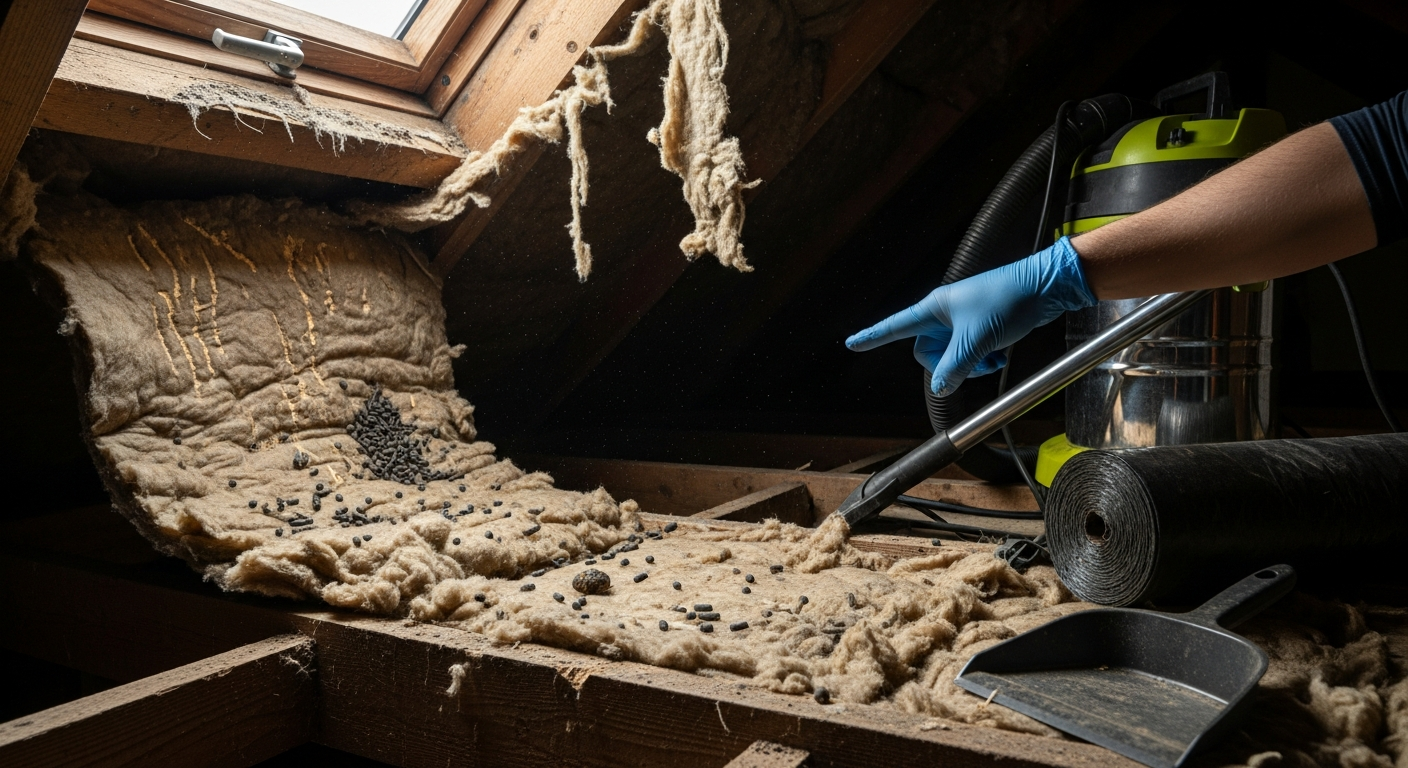
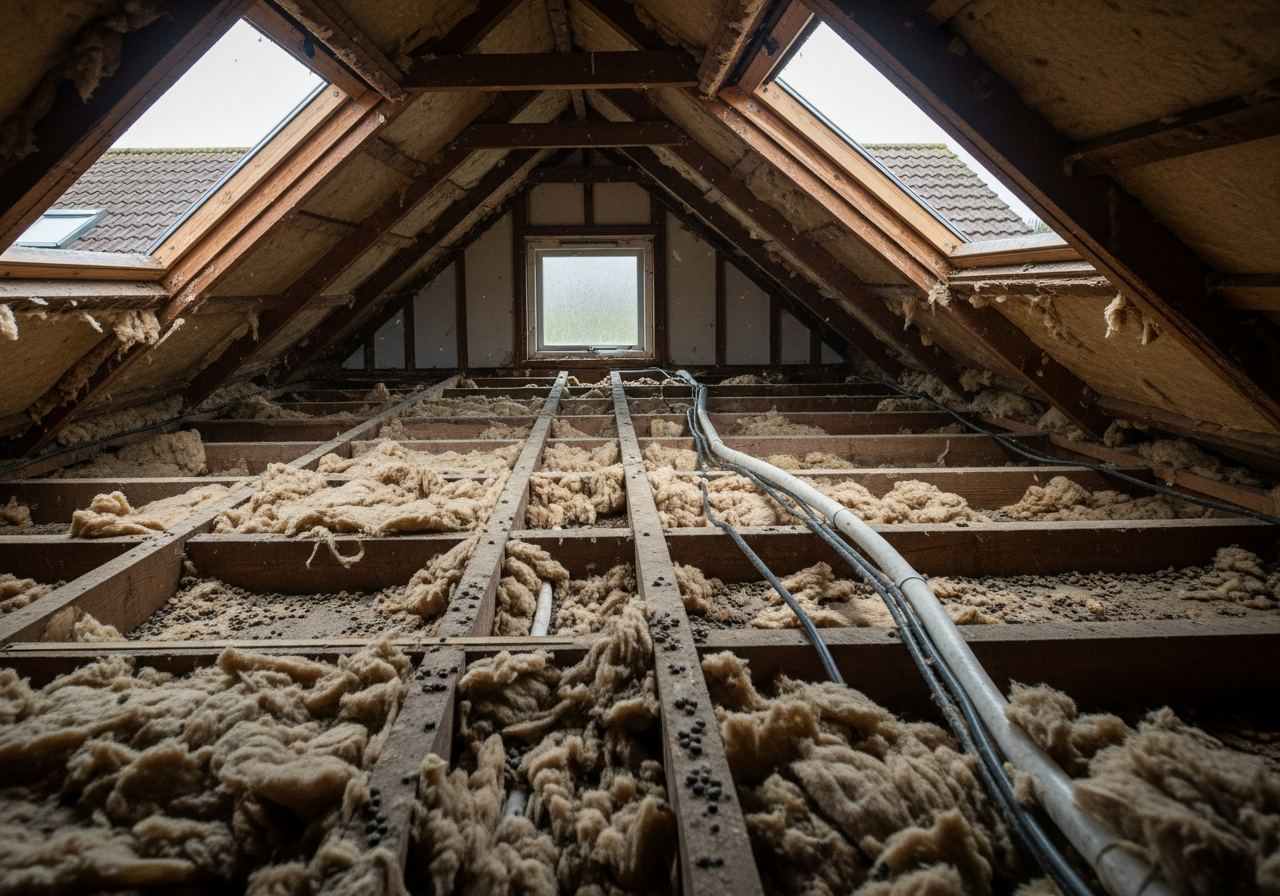
The most obvious indicators of rodent activity appear directly in your insulation material itself. Look for compressed or flattened areas where animals have created pathways through the fibreglass or mineral wool. These “runs” often form distinct trails between entry points and nesting areas, compacting the insulation and reducing its thermal efficiency significantly.
Torn or shredded sections reveal where rodents have pulled material away for nest building. You’ll typically find these damaged areas concentrated around warm spots like pipe runs or near external walls where heat loss creates attractive microclimates. The insulation may appear matted down or have chunks missing entirely, leaving gaps that allow cold air to penetrate your living spaces below.
Nesting material mixed into your insulation presents another clear warning sign. Rodents gather fabric scraps, paper, cardboard, and even pull apart existing insulation to create comfortable breeding areas. These nests often contain food debris and create focal points for the heaviest contamination in your loft space.
Droppings and Urine Contamination
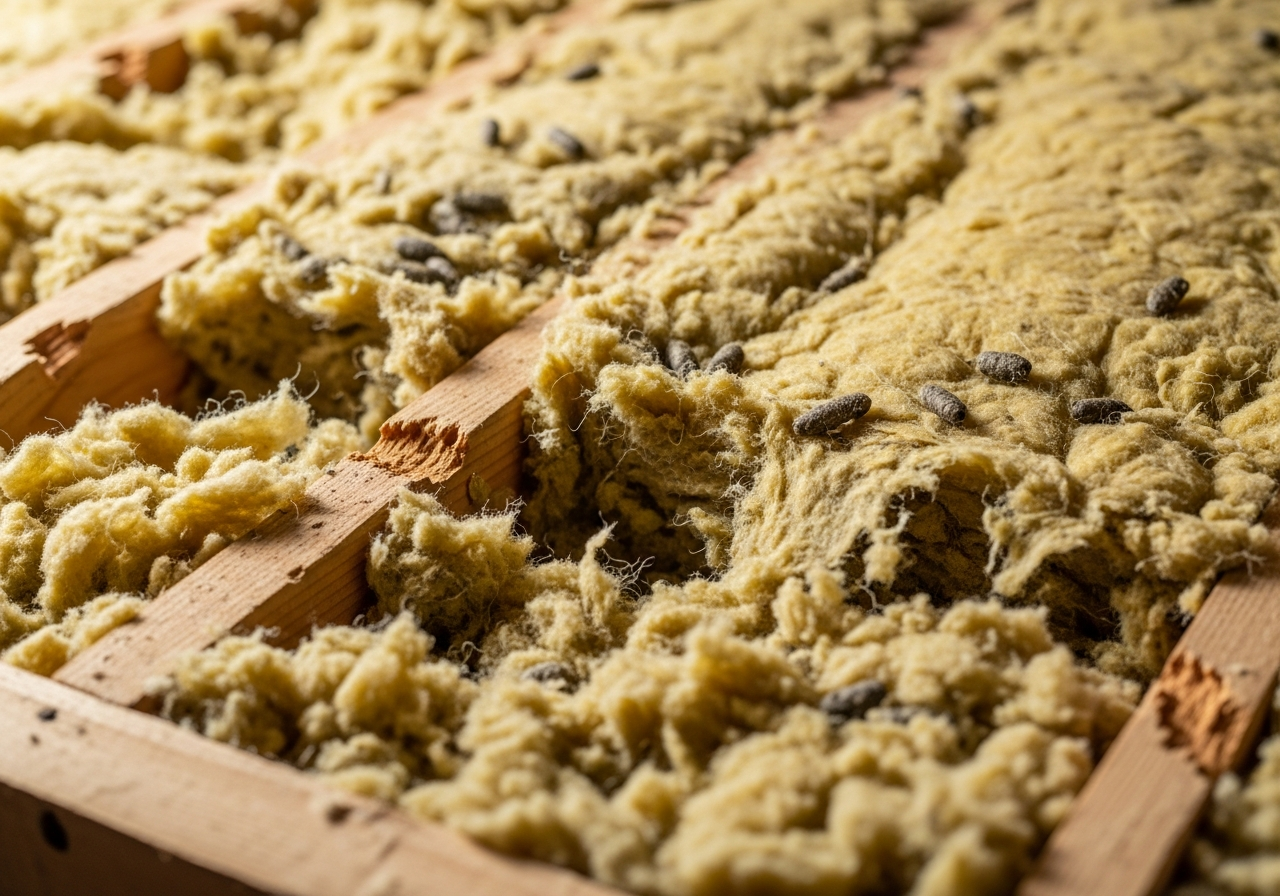
Fresh rodent droppings scattered throughout your loft insulation indicate active infestation requiring immediate attention. Mouse droppings appear as small, dark pellets roughly 3-6mm long, whilst rat droppings are considerably larger at 12-18mm and more cylindrical in shape. Fresh droppings appear dark and soft, whilst older ones become grey and crumbly over time.
The quantity of droppings helps gauge the severity of your problem. A few scattered pellets might indicate occasional visitors, but concentrated areas with dozens of droppings suggest established territories or nesting sites. Pay particular attention to corners, along roof timbers, and near any stored items where rodents feel secure.
Urine contamination poses perhaps the greatest health risk, though it’s often less visible than droppings. Look for yellowish staining on insulation material or dark patches where urine has soaked through. The ammonia-like smell becomes particularly noticeable in warm weather when odours intensify. This contamination makes professional rodent-contaminated insulation clearance essential, as standard cleaning methods cannot adequately address the health risks.
Structural Damage and Entry Points
Gnaw marks on roof timbers, pipe insulation, or electrical cables reveal where rodents have been active beyond just moving through your insulation. Rats and mice need to constantly gnaw to keep their teeth manageable, leaving distinctive marks on wooden beams, plastic pipes, and cable sheaths. Fresh gnaw marks appear light-coloured, whilst older damage darkens with time.
Check around potential entry points where your roof meets walls, around pipe penetrations, or near damaged roof tiles. Rodents can squeeze through surprisingly small gaps — mice need only 6mm whilst rats require about 12mm. Look for grease marks around these openings where repeated use has left dark smears from their fur.
Disturbed or displaced insulation around these entry areas often creates the first evidence of invasion. You might notice insulation pulled away from eaves or scattered near access points where animals have enlarged existing gaps or created new pathways into your loft space.
Secondary Indicators Throughout Your Home
Signs of rodent activity aren’t confined to your loft — problems upstairs often manifest in living areas below. Unusual sounds overhead, particularly scratching, scurrying, or gnawing noises during quiet evening hours, suggest active populations above your ceiling. These sounds intensify during autumn and winter when rodents seek warm shelter.
Increased energy bills without obvious cause might indicate compromised insulation effectiveness due to rodent damage. Contaminated or compressed insulation loses its thermal properties, forcing your heating system to work harder maintaining comfortable temperatures. Cold spots in rooms directly below damaged areas often develop as gaps allow heat to escape.
Musty or ammonia-like odours filtering down from your loft space, particularly during warm weather, strongly suggest urine contamination above. These smells can trigger respiratory problems and indicate serious hygiene concerns requiring professional intervention.
Key Takeaways
• Physical damage to insulation includes compressed pathways, torn sections, and embedded nesting materials • Fresh droppings and urine staining create health hazards requiring professional decontamination • Gnaw marks on structural elements and evidence around entry points reveal the extent of infestation • Secondary signs like unusual sounds, cold spots, and odours in living areas indicate overhead problems • Early detection prevents escalation and reduces the scope of necessary remediation work
What Our Customers Say
Trusted by homeowners across Coventry & Warwickshire — here's what they have to say.
"Brilliant service from start to finish. The team were professional, tidy, and explained everything clearly. Our energy bills have dropped noticeably since the new insulation went in."
"Had spray foam removed and mineral wool installed. The surveyor was thorough and honest about what needed doing. Really impressed with the quality of work."
"We had terrible condensation in our loft. They diagnosed the problem quickly, improved the ventilation, and replaced the old insulation. No more damp and the house is noticeably warmer."
Frequently Asked Questions
A small rodent population can significantly compromise insulation within weeks of establishing territory. Their constant movement creates pathways whilst nesting behaviour concentrates damage in specific areas, reducing thermal efficiency measurably.
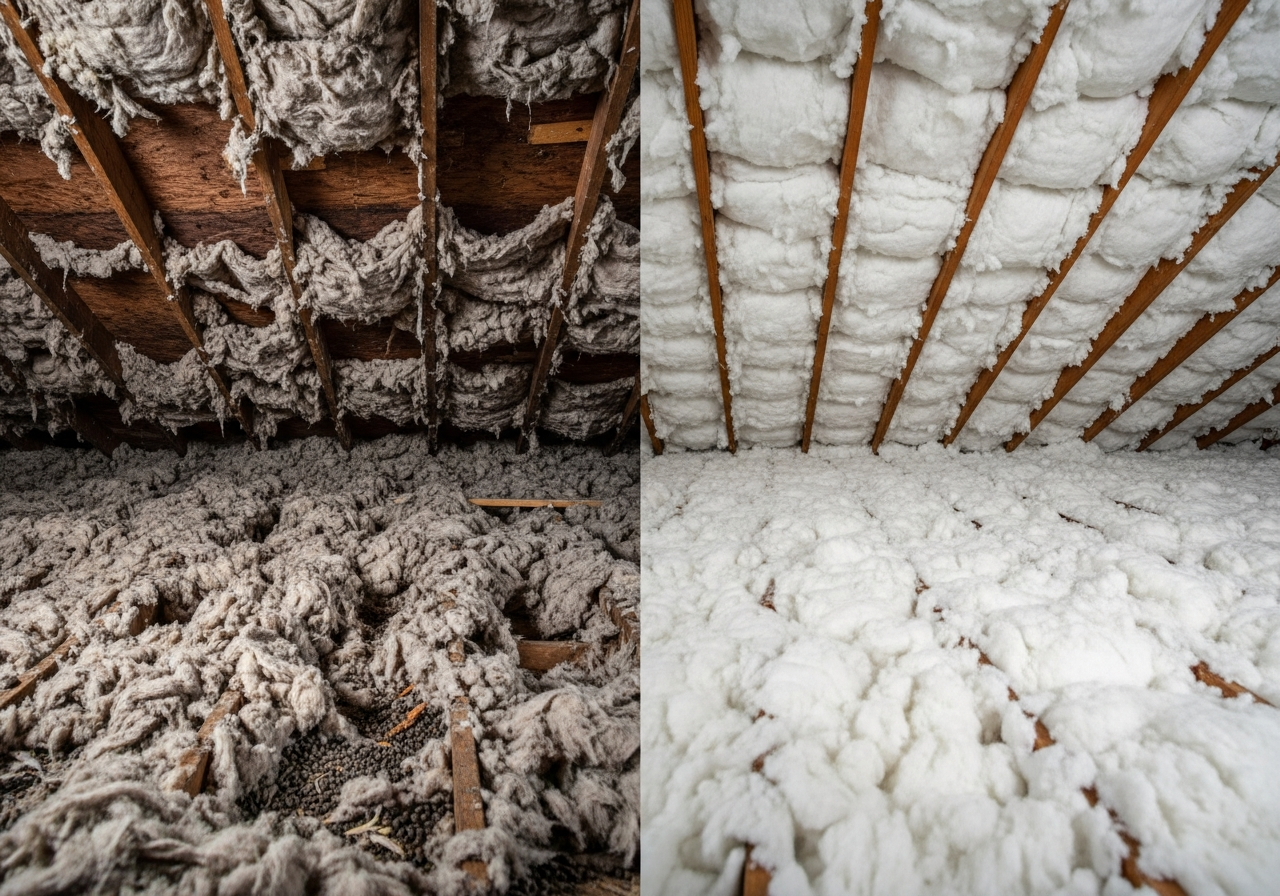
We strongly advise against DIY removal of rodent-contaminated insulation. Dried urine and droppings create airborne particles carrying serious health risks including Hantavirus and Salmonella. Professional protective equipment and disposal methods are essential.
Heavily contaminated insulation cannot be adequately cleaned and poses ongoing health risks. Professional assessment determines whether localised removal suffices or complete replacement becomes necessary for safety and thermal performance. If you've discovered signs of rodent contamination in your loft insulation, don't attempt removal yourself. Our experienced team carries out safe, thorough rodent-contaminated insulation clearance, properly disposing of affected material and installing fresh insulation to restore your home's thermal efficiency. Contact us today to arrange a comprehensive assessment and quotation for professional remediation work. META_DESCRIPTION: Learn to identify rodent damage in loft insulation including droppings, urine stains, physical damage & entry points. Professional Rodent-Contaminated Insulation Clearance guidance.
Ready for a Free Survey?
No obligation. We assess your property and provide a detailed quote — usually within 48 hours.