Safe Disposal of Old Loft Insulation Materials
When upgrading your home's thermal efficiency, the question of what to do with existing insulation materials becomes crucial. Many homeowners...
Safe Disposal of Old Loft Insulation Materials
When upgrading your home’s thermal efficiency, the question of what to do with existing insulation materials becomes crucial. Many homeowners underestimate the complexities involved in proper disposal, but understanding the correct methods protects both your health and the environment. Different insulation types require specific handling approaches, and some materials present serious safety concerns if not managed properly. Whether you’re tackling a DIY removal project or preparing for professional installation, knowing the safe disposal requirements helps you plan effectively and avoid costly mistakes.
Understanding Different Insulation Types and Their Disposal Requirements
The disposal method for your old insulation depends entirely on what type you’re removing. Mineral wool and glass fibre insulation, commonly found in UK homes built after 1980, can typically go to household waste recycling centres in sealed bags. These materials aren’t hazardous but require careful handling to prevent skin and respiratory irritation.
Blown-in cellulose insulation, whilst environmentally friendly, creates significant dust during removal and needs proper containment. Polystyrene boards must be taken to specialist recycling facilities that accept rigid foam plastics—standard household bins won’t accept large quantities.
The most concerning category involves older properties where asbestos-containing materials might be present. Any insulation installed before 1980 requires professional assessment before removal. We encounter this regularly during our Old Loft Insulation Removal & Disposal projects, where proper identification prevents dangerous exposure.
Polyurethane foam insulation presents unique challenges because it often bonds firmly to structural elements. Removal frequently requires mechanical methods that generate considerable debris, all of which needs appropriate disposal channels.
Health and Safety Considerations During Disposal
Personal protective equipment becomes non-negotiable when handling any insulation material. At minimum, you’ll need disposable coveralls, gloves, safety goggles, and a P2-rated dust mask. Many homeowners skip these precautions during small projects, but even brief exposure to glass fibres causes skin irritation and respiratory discomfort.
Ventilation requirements extend beyond simply opening windows. Cross-ventilation helps, but mechanical extraction often proves necessary for enclosed loft spaces. We’ve seen too many DIY projects where inadequate ventilation led to health issues days after completion.
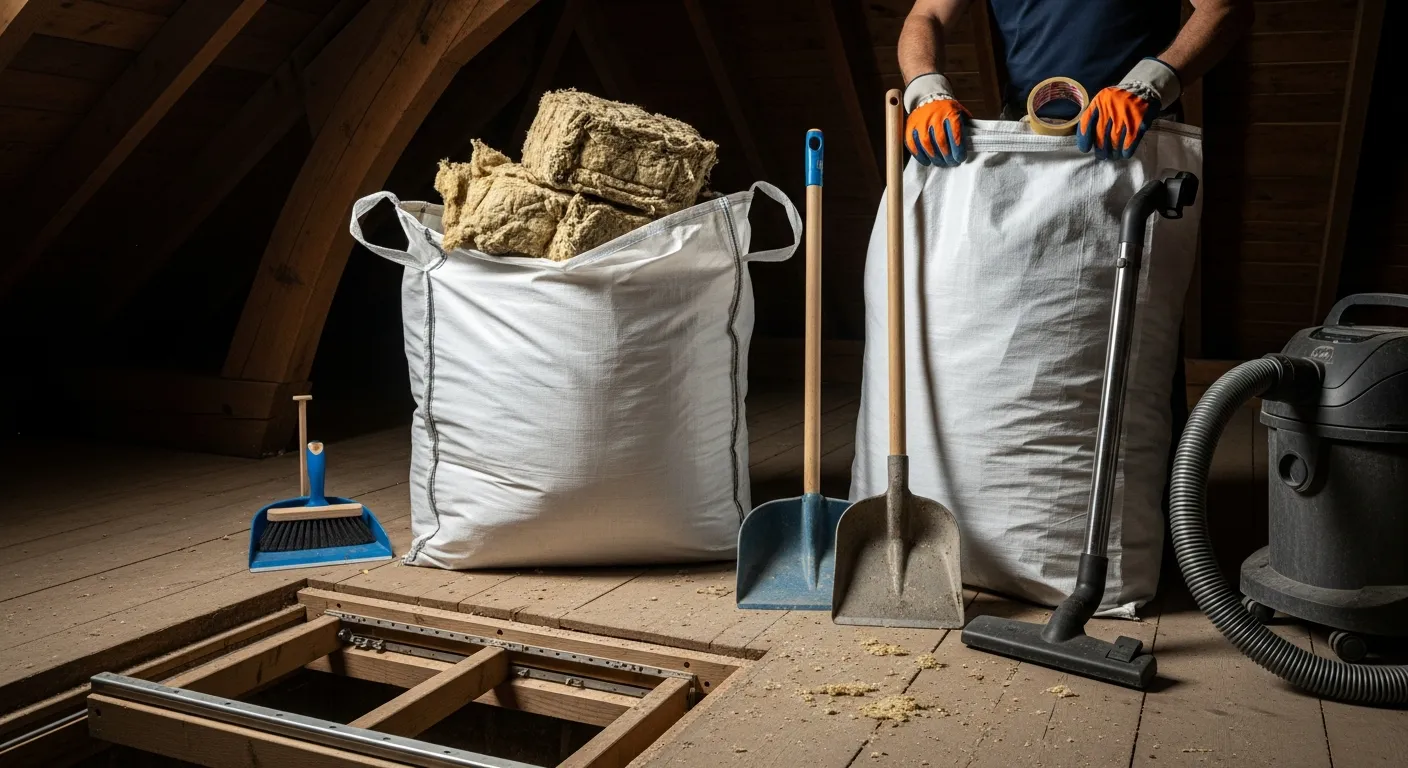
Containment strategies prevent contamination spreading throughout your home. Plastic sheeting should seal access routes, and all removed material goes directly into heavy-duty bags without intermediate storage. Double-bagging provides extra protection against tears that could release fibres.
Work in sections rather than attempting complete removal in one session. This approach reduces airborne particle concentrations and makes the physical demands more manageable. Plan for frequent breaks in fresh air, especially when working in confined spaces.
Waste Disposal Routes and Environmental Responsibilities
Most councils accept bagged mineral wool insulation at household waste recycling centres, but check capacity limits beforehand. Many facilities restrict quantities to prevent commercial dumping, so large renovation projects might require multiple trips or alternative arrangements.
Commercial waste companies offer skip hire specifically for insulation materials, though costs vary significantly. These services often provide the heavy-duty bags necessary for safe transport and handle disposal at licensed facilities.
Specialist recycling programmes exist for certain insulation types. Some manufacturers operate take-back schemes for their products, particularly for rigid foam boards. These programmes often provide environmental benefits beyond standard waste disposal.
Never burn insulation materials, regardless of type. Even seemingly natural products like cellulose can release toxic compounds when combusted. Similarly, regular household bins aren’t suitable for anything beyond very small quantities due to volume restrictions and handling concerns.
Environmental considerations extend to transportation methods. Secure loading prevents material dispersal during transport, protecting both road users and the environment. We always ensure proper containment when removing materials from client properties.
Professional Removal vs DIY Approaches
DIY removal works well for recent, non-hazardous insulation in accessible locations. However, the hidden costs often surprise homeowners: protective equipment, disposal fees, vehicle hire for transport, and time investment frequently exceed initial estimates.
Professional removal becomes essential when dealing with suspected asbestos, difficult access situations, or large quantities. The expertise in material identification, safe handling procedures, and disposal compliance justifies the investment for complex projects.
Consider the broader renovation context when deciding your approach. If you’re planning comprehensive loft improvements, professional removal often integrates efficiently with new insulation installation, reducing overall project disruption.
Insurance implications affect this decision too. Some policies require professional handling for certain material types, and DIY incidents might not receive coverage. Check your policy terms before starting any removal work.
Key Takeaways
• Different insulation materials require specific disposal methods—identify your type before starting removal • Personal protective equipment isn’t optional, even for small quantities or brief exposure periods • Most councils accept bagged mineral wool at recycling centres, but check quantity limits first • Never attempt removal of suspected asbestos materials without professional assessment • Professional services often prove cost-effective when factoring in equipment, disposal fees, and time investment
What Our Customers Say
Trusted by homeowners across Coventry & Warwickshire — here's what they have to say.
"Brilliant service from start to finish. The team were professional, tidy, and explained everything clearly. Our energy bills have dropped noticeably since the new insulation went in."
"Had spray foam removed and mineral wool installed. The surveyor was thorough and honest about what needed doing. Really impressed with the quality of work."
"We had terrible condensation in our loft. They diagnosed the problem quickly, improved the ventilation, and replaced the old insulation. No more damp and the house is noticeably warmer."
Frequently Asked Questions
Small quantities of mineral wool insulation can go in household bins if properly bagged, but most councils limit this to prevent overloading collection vehicles. For anything more than a few bags, you'll need alternative disposal routes through recycling centres or waste companies.
Any insulation installed before 1980 could potentially contain asbestos fibres. Look for grey or blue-grey loose-fill material, or boards with a papery texture. If you're unsure about the age or type, arrange professional testing before attempting removal.
Professional removal typically costs £3-6 per square metre depending on material type, accessibility, and disposal requirements. This includes safe handling, proper containment, and licensed disposal. Suspected asbestos materials require specialist contractors with higher rates but essential safety protocols. Ready to upgrade your loft insulation safely and efficiently? We handle the complete removal and disposal process, ensuring your old materials are properly managed while preparing for optimal thermal performance. Contact us for a comprehensive assessment of your insulation removal requirements.
Ready for a Free Survey?
No obligation. We assess your property and provide a detailed quote — usually within 48 hours.